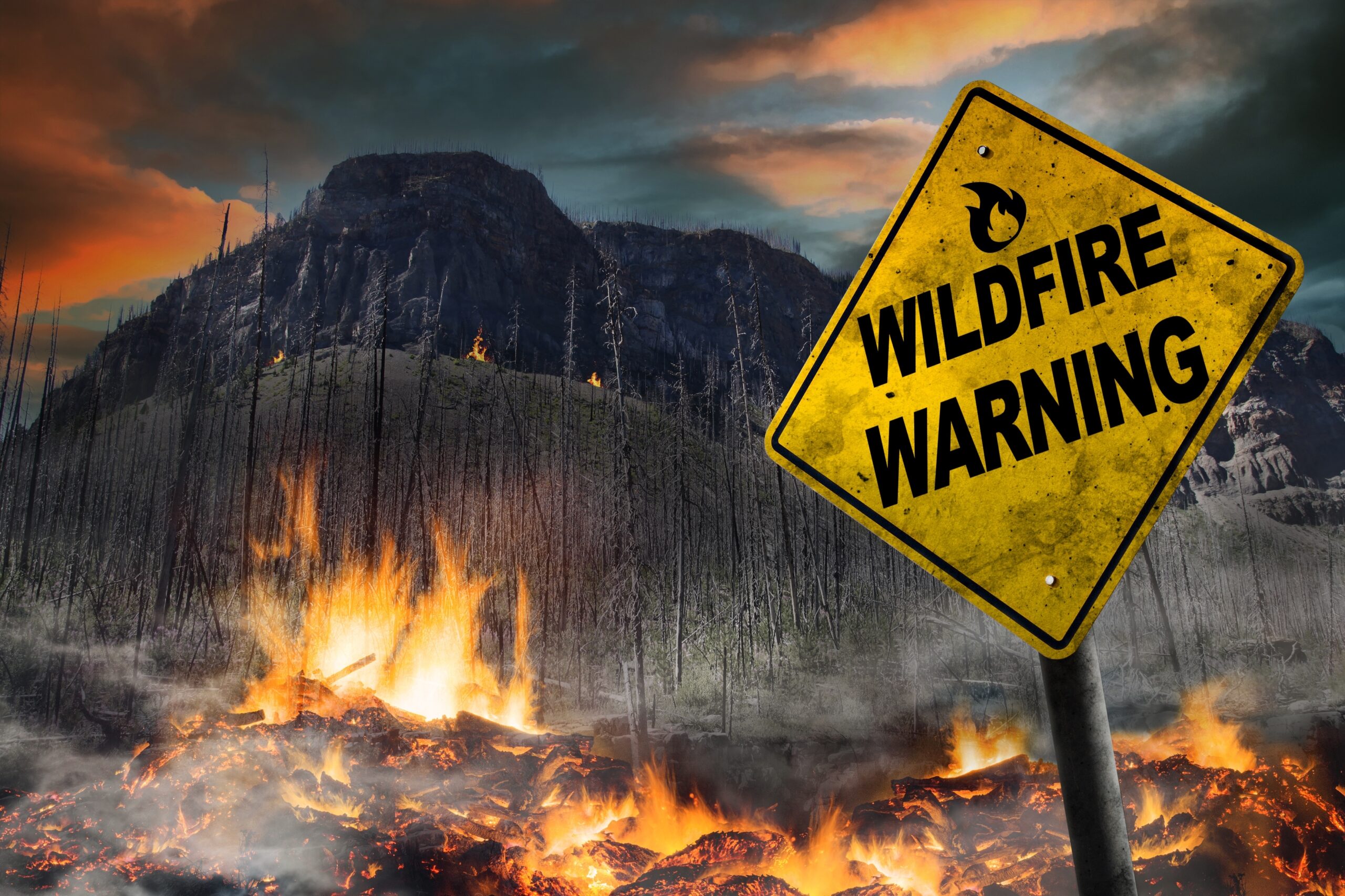
Wildfires spew 21% more invisible toxins into the air than scientists ever imagined, turning distant skies into silent killers that overlap with humanity’s dirtiest hotspots.
Story Snapshot
- Global wildland fires emit 143 million tons of organic compounds yearly, 21% above prior estimates, dominated by hard-to-measure IVOCs and SVOCs.
- These pollutants collide with urban smog in Equatorial Asia, Northern Hemisphere Africa, and Southeast Asia, worsening air quality crises.
- Smoldering fire phases and chemical shifts were overlooked, demanding urgent updates to health models and policies.
- U.S. wildfires alone supply 18-25% of ambient PM2.5, linking to 0.42% higher elderly mortality and persistent lung damage.
- 339,000 global premature deaths annually from smoke, now likely higher with new emission data.
January 2026 Study Reveals Emission Underestimation
Lyuyin Huang’s team published findings in Environmental Science & Technology on January 7, 2026. Global wildland fires, including wildfires and prescribed burns, release 143 million tons of organic compounds annually. This figure exceeds previous inventories by 21%, driven by intermediate-volatility organic compounds (IVOCs) and semi-volatile organic compounds (SVOCs). Researchers modeled flaming and smoldering phases separately. Smoldering produces most overlooked pollutants. Chemical transformations in smoke further boost emissions.
These compounds form secondary organic aerosols, tiny particles that penetrate deep into lungs. Prior models ignored this, focusing on PM2.5 alone. Hotspots overlap human pollution in Equatorial Asia, Northern Hemisphere Africa, and Southeast Asia. Air quality there plummets as fire smoke mixes with industrial emissions. Health risks multiply in these dense populations.
Wildfires are polluting the air far more than thought #AirPollution #Wildfires https://t.co/TrcAJhNunX
— Respro® UK (@ResproUK) January 7, 2026
Why Past Estimates Fell Short
Traditional inventories lumped fire phases together. Flaming burns hot and clean; smoldering smolders low, emitting stickier gases. Huang’s advanced modeling separated them. IVOCs and SVOCs evaporate slowly, evading old sensors. Post-emission chemistry turns them into aerosols far from fires. Jet streams carry smoke thousands of miles. U.S. Western regions see 50% of PM2.5 from fires some years.
Background data confirms patterns. Wildfire smoke varies by fuel, weather, and burn type. Peat fires in 2008 North Carolina exceeded air standards, spiking emergency visits. Vegetation combustion releases PM2.5, CO, NO2, and VOCs. Nonlinear health effects amplify small exposures. A 1 microgram PM2.5 increase causes outsized harm, per NBER analysis of Medicare data from 2007-2019.
Health Toll on Vulnerable Populations
Short-term effects strike fast: coughing, wheezing, eye irritation, asthma attacks. 2008 North Carolina peat fires raised respiratory risks five days post-exposure. Cardiac events surge too. Long-term, lung function drops persist for two years. Yale studies link chronic smoke PM2.5 to higher all-cause mortality across U.S. counties from 2007-2020. Elderly face 0.42% death risk hike; ER visits rise 0.69%.
Children suffer lung development setbacks. Respiratory patients fare the worst. Global toll hits 339,000 premature deaths yearly, now underestimated. UC Davis notes prolonged effects amid rising fires. EPA warns no safe distance exists; even brief exposures endanger hearts and lungs. Dementia and preterm birth links emerge, though data gaps remain.
Watch:
https://www.youtube.com/watch?v=8HVE5tzz2nU
Got a health question? Ask our AI doctor instantly, it’s free.
Policy and Economic Ramifications
Updated inventories reshape air-quality models, health assessments, and climate policies. Insurers face rising morbidity costs, per 2025 Society of Actuaries report. Medicare burdens grow with elderly impacts. Communities far from fires endure alerts and evacuations. Western U.S. sees heaviest loads.
Stakeholders push refinements. EPA tracks wildland fire health; Yale and UC Davis quantify toxicity. Huang calls for policy shifts based on precise data. Overlaps in Asia and Africa complicate global efforts. Stronger standards make sense where fires evade compliance, protecting families without bureaucratic excess.
Your instant doctor companion – online 24 hours a day.
Sources:
1. https://www.nber.org/papers/w32924
2. https://pmc.ncbi.nlm.nih.gov/articles/PMC5010409/
3. https://environmentalhealth.ucdavis.edu/wildfires/environmental-health-impacts
4. https://www.epa.gov/air-research/wildland-fire-research-human-health
5. https://www.sciencedaily.com/releases/2026/01/260107012114.htm
6. https://ysph.yale.edu/news-article/long-term-exposure-to-wildfire-smoke-associated-with-higher-risk-of-death/
7. https://www.soa.org/resources/research-reports/2025/wildfireimpact-usinsurers-morbidity/
8. https://woods.stanford.edu/news/health-impacts-wildfire-smoke