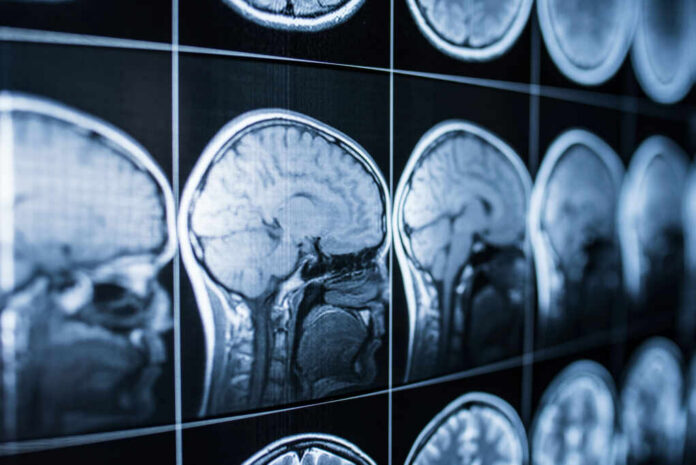
A randomized clinical trial found that just 150 minutes of aerobic exercise per week made participants’ brains look nearly one year younger on an MRI scan — and the people in the study were nowhere near retirement age.
At a Glance
- A 12-month trial of 130 adults aged 26 to 58 showed that regular aerobic exercise reduced a key brain-aging marker by about 0.6 years while inactive participants got 0.35 years older — a gap of nearly one full year.
- The exercise dose was modest: roughly 150 minutes per week of moderate-to-vigorous aerobic activity.
- Scientists measured brain age using MRI scans and a marker called brain-predicted age difference, which compares how old your brain looks versus your actual age.
- Researchers say midlife — not old age — may be the most important window to start protecting your brain.
What the Study Actually Found
The AdventHealth Research Institute ran a single-blind, 12-month randomized clinical trial with 130 healthy adults. [14] The exercise group did moderate-to-vigorous aerobic workouts. The control group did not change their habits. After one year, MRI scans told a clear story. The exercise group’s brain-predicted age difference dropped by about 0.6 years. The control group’s brains looked about 0.35 years older. [4] The gap between the two groups came out to nearly one full year of brain aging — in just 12 months.
The MRI marker scientists used is called brain-predicted age difference, or brain-PAD. Think of it as a biological clock for your brain. A lower number means your brain looks younger than your birth certificate says it should. A higher number is the opposite. This is not a memory test or a mood survey. It is a structural measurement of how your brain tissue has aged. [13] That makes it harder to fake and harder to dismiss.
Why Midlife Is the Critical Window
Most brain-aging research focuses on older adults already showing decline. This study targeted people aged 26 to 58 — adults in their prime working years. [1] That framing matters. Researchers believe the brain changes that lead to dementia and cognitive decline begin quietly, decades before symptoms appear. Waiting until your 70s to start exercising may mean you missed the window where intervention does the most good. Starting in midlife, when the brain is still healthy, appears to be when exercise delivers its biggest protective punch.
Harvard Health research supports this direction, showing that moderate aerobic exercise done three days a week can grow the hippocampus — the part of the brain most tied to memory. [3] The Centers for Disease Control and Prevention (CDC) also confirms that physical activity improves memory, focus, and emotional balance across age groups. [6] The new trial adds a structural, MRI-confirmed data point to what was already a strong body of evidence.
The Honest Limits of This Research
The study authors themselves described the results as modest. [4] The participants were healthy, relatively well-educated volunteers — not a random slice of the American public. That limits how broadly you can apply the findings. The trial also measured a brain-imaging biomarker, not dementia rates or long-term disability. Showing that a brain looks younger on an MRI is not the same as proving it will resist Alzheimer’s disease ten years from now. Researchers and doctors are careful to make that distinction.
A 2026 clinical trial found 150 minutes of aerobic exercise per week makes your brain appear 1 year younger — measured directly via MRI.
Not supplements. Not medication. Walking and cycling.
You don't slow brain aging. You reverse it.
— Xcon Media (@XconMedia) June 9, 2026
A separate review published in The Lancet explored the protective mechanisms of endurance exercise on the brain, pointing to improved blood flow, reduced inflammation, and stronger neural connections as key pathways. [7] The National Institute on Aging has also noted that lifelong exercise looks promising as a strategy for reducing neurodegenerative risk, though long-term proof in humans is still building. [5] The science is not complete — but the direction of the evidence is consistent and hard to ignore.
150 Minutes a Week Is a Very Low Bar
Here is what should grab your attention. The dose of exercise used in this trial was not extreme. It was roughly 150 minutes per week of moderate-to-vigorous aerobic activity. That breaks down to about 30 minutes, five days a week — a brisk walk, a bike ride, a swim. [14] You do not need a personal trainer or a gym membership. You need consistency. For adults over 40 who already feel the mental fog of a busy life, that is both encouraging and a little humbling. The barrier is not physical. It is priority.
Compelling evidence from multiple studies confirms that aerobic and resistance training both improve cognitive function and mental health in aging adults. [2] The new trial sharpens that message. It puts a number on the benefit, ties it to a measurable brain structure, and shows it can happen in people who are not yet old. If your brain can look a year younger in 12 months of moderate exercise, the more unsettling question is: what does another year of inactivity cost you?
Sources:
[1] Web – Yes, Exercise Can Reverse Brain Aging. How Much Is Less Than You Might …
[2] Web – Regular aerobic exercise slows a key marker of brain aging in midlife
[3] Web – Physical Activity to Counter Age-Related Cognitive Decline – PMC
[4] Web – Aerobic exercise cognitive fitness – Harvard Health
[5] Web – Can exercise turn back the clock on your brain? New study says yes
[6] Web – Lifelong exercise promotes brain health in older adults
[7] Web – Physical Activity Boosts Brain Health – CDC
[13] Web – Investigating aerobic exercise and cognition in older adults
[14] Web – MRI scans show exercise can make the brain look younger