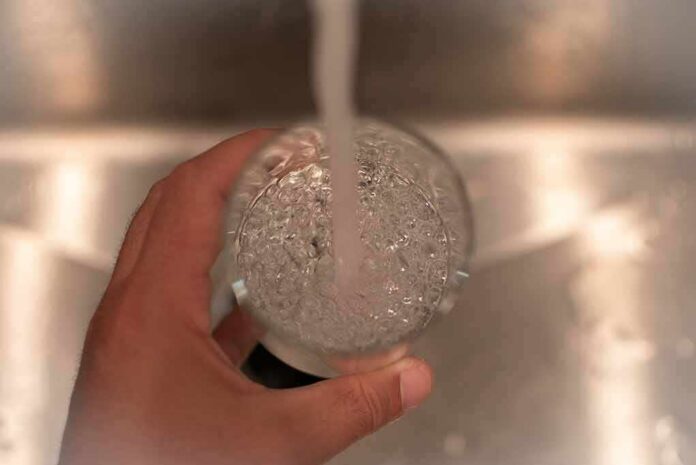
Your water can taste clean, look clear, and still carry toxins your filter misses.
At a Glance
- ROSE launched a home water test that screens one tap sample for 100+ contaminants.
- The kit sends your sample to an ISO-certified partner lab, then reports results to you.
- The test targets PFAS, pesticides, heavy metals, and more that you cannot see or taste.
- The price is listed at $399, sold through the company’s website at launch.
What ROSE Says Its Test Does, In Plain Terms
ROSE announced a consumer water test that analyzes a single tap sample for more than 100 contaminants, including per- and polyfluoroalkyl substances, pesticides, heavy metals, disinfection byproducts, volatile organic compounds, and petroleum compounds. The company describes a simple flow: you collect water, ship the bottle, and receive a lab report. The process uses an ISO-certified partner laboratory, according to the launch materials. Coverage of the launch repeats the key points and the broad contaminant menu.
The company’s pitch points at an everyday gap. Most filters make water taste better, but taste does not track lead, arsenic, or per- and polyfluoroalkyl substances. That gap matters in older homes with legacy plumbing, private wells, or areas with known per- and polyfluoroalkyl substances alerts. A lab test can reveal what your senses miss. ROSE frames the kit as a fast way to get that read without piecing together several narrow tests.
Why This Matters If You Own A Filter
A filter claim is not the same as proof in your kitchen. National Sanitation Foundation International certifies filters by testing full systems against named standards and specific contaminant reduction claims, so buyers can match a product to a problem. A broad lab report can complement this. It can tell you what is in your water today. Then you can pick a filter with matching, certified reduction claims. That pairing turns a guess into a plan rooted in evidence and accountability.
Households often conflate four steps: finding a contaminant, measuring it accurately, judging the health risk, and proving that a filter removes it. Regulators and certifiers treat those as separate tasks. ROSE’s test aims at the first two: detect and measure. Product certifications aim at the fourth: reduce to a verified level under stress tests. Both pieces help a family decide when to replace a cartridge, upgrade to reverse osmosis, or add point-of-use treatment for a nursery sink.
How To Actually Check Your Filter’s Performance
Start with a baseline. Test unfiltered cold tap water from the faucet you care about most. Review the report and flag any item above federal or state guidelines. Match those items to certified filter claims listed by National Sanitation Foundation International for specific standards and contaminants. Confirm that your current device is certified for those exact contaminants, not just for taste and odor, which addresses chlorine but not per- and polyfluoroalkyl substances or lead.
Then test the right point. If you run a pitcher or under-sink unit, collect a second sample from the filtered outlet after normal use. Compare the before and after results side by side. Look for reductions that align with the filter’s certified claims. If a target contaminant does not drop as expected, check cartridge age, flow rate, and installation. If performance still lags, consider a certified reverse osmosis system or a certified carbon block designed for your contaminant profile.
What ROSE Has Disclosed, And What To Watch For
ROSE has disclosed the product categories, a claim of more than 100 analytes, use of an ISO-certified partner laboratory, and a launch price of $399 with direct availability online. The practical takeaway is simple: a one-bottle lab test can uncover contaminants that a taste test misses, which helps you choose the right certified filter. Launch coverage positions the kit as a consumer path to clarity on per- and polyfluoroalkyl substances, metals, and industrial compounds.
One brief caveat belongs here because it shapes how you act on results. Launch materials do not list the full analyte menu or method details in public view, which means you should still align any filter choice with named, certified reduction claims from National Sanitation Foundation International rather than assuming broad coverage by default. That approach honors common sense: test to see what you face, then buy gear that is proven, by name, to fix that exact problem.
Sources:
mindbodygreen.com, businesswire.com, rosecitylabs.com