A quiet slip of a dial in a French operating room in 1987 turned into a switch that can give thousands of people their lives back.
Story Snapshot
- A routine brain surgery in 1987 revealed that high-frequency electricity could shut down tremor without destroying brain tissue.
- Prof. Alim-Louis Benabid turned that accident into deep brain stimulation, now helping over 100,000 people with severe Parkinson’s disease.
- He earned top medical honors, including the Lasker Award and the Breakthrough Prize, for this work.
- Doctors still do not fully understand how deep brain stimulation works, yet it has become a global standard of care.
The day a tremor stopped and a new kind of brain surgery began
In 1987, French neurosurgeon Alim-Louis Benabid was doing what should have been a standard procedure: a lesion in the thalamus to calm a patient’s severe tremor. He used an electrode to test the brain area before destroying it, starting with usual stimulation frequencies around 30 to 50 cycles per second, or hertz. The tremor did not change. Then he pushed the frequency over 100 hertz. The tremor stopped suddenly, and it stopped without cutting or burning any brain tissue. That single moment rewrote the plan for the rest of the operation and, soon, for the field.
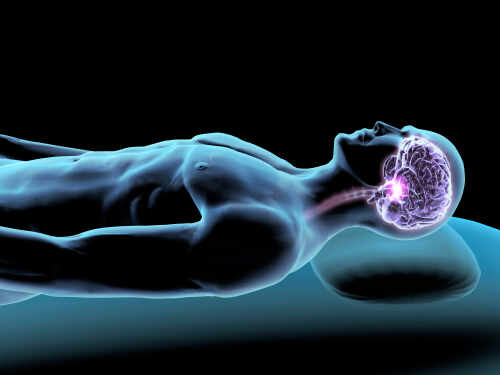
Benabid did not treat the effect as a lucky fluke. He and his team repeated the high-frequency stimulation in other patients and saw the same paradox: stronger, faster electrical pulses did not excite the brain more; they quieted the tremor. Within a few years, he reported that chronic, high-frequency stimulation could be used instead of permanent lesions for tremor in Parkinson’s disease and related disorders. Deep brain stimulation was no longer just an odd intraoperative trick. It became a planned therapy: place an electrode, connect it to an implanted pulse generator, and tune the charge like a “pacemaker for the brain”.
From odd observation to global treatment for Parkinson’s disease
Deep brain stimulation grew from that first thalamic experience into a full strategy for advanced Parkinson’s disease. Benabid’s group showed that high-frequency stimulation of targets like the subthalamic nucleus eased tremor, stiffness, and slowed movement, and it also reduced the harsh side effects of long-term drug therapy. The treatment was reversible and adjustable. If side effects appeared, doctors could turn down the stimulation instead of living forever with a bad lesion. Over time, deep brain stimulation became a standard option for patients whose medications no longer gave stable control. Award committees later noted that this approach restored motor skills and everyday function to people who had been trapped by severe symptoms.
By the time the Lasker Foundation honored Benabid in 2014, more than 100,000 patients worldwide with severe Parkinson’s complications had received deep brain stimulation. That number marks more than a niche experiment. It reflects wide acceptance by surgeons, neurologists, and regulators. The Breakthrough Prize citation went further, calling deep brain stimulation a revolution in the treatment of Parkinson’s disease and crediting Benabid’s role as inventor and pioneer of high-frequency stimulation. These top awards, along with European inventor recognition, drew a clear line from a single operating room to a global therapy.
How physics training shaped a new way to work inside the brain
Benabid did not arrive in the operating room as a typical surgeon. He trained first as a physician, then earned a doctorate in physics, which is an unusual pairing in clinical neurosurgery. That dual background mattered. Deep brain stimulation depends on understanding how electric fields spread through tissue and how signals change when you alter their frequency. A surgeon who also thinks like a physicist is more likely to wonder what happens if you turn the dial past the usual limits.
His team also cared about engineering. To better map the brain and place electrodes accurately, they developed tools such as a five-electrode holder often called the “Ben Gun,” which allowed several fine recording tips to sample nearby brain areas at once. Working with industry partners like Medtronic, they helped create four-contact electrodes and stimulators with two outputs, making it possible to fine-tune current in multiple directions. Some critics worry whenever doctors and device companies collaborate, fearing commercial bias. Yet in this case, the hardware was needed to deliver the therapy that saved patients from disabling symptoms. The real test is results for patients and transparency about data, not whether a company name appears on the device.
Unknown mechanisms, real relief, and the risk of overpromising
Despite all the success, no one can yet give a full, satisfying explanation of how high-frequency deep brain stimulation works at the cellular level. The leading theory is that rapid pulses somehow shut down abnormal firing patterns in the circuits that control movement, acting like a jammer to stop noisy signals. For many technically minded readers, this sounds uncomfortable. In other areas of medicine, a claim must rest on clear mechanistic proof and strong randomized data. Deep brain stimulation still leans more on observed benefit than on a complete wiring diagram of the brain.
For a skeptic, this gap is a reminder to demand rigorous studies, long-term follow-up, and honest reporting of risks. Parkinson’s disease is incurable and cruel. When a therapy repeatedly restores independence, and tens of thousands of real-world cases support it, it earns a serious place in medicine while researchers keep working to fill in the missing pieces. The story of Alim-Louis Benabid shows what can happen when a doctor refuses to ignore a strange result—and then insists that it serve patients, not theory, first.
Sources:
youtube.com, epo.org, jamanetwork.com, laskerfoundation.org, linkedin.com, pmc.ncbi.nlm.nih.gov, presse.inserm.fr