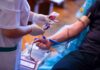
A tiny vial of blood, just one or two teaspoons, may be able to flag stomach cancer before a patient ever feels sick.
Quick Take
- Researchers in China tested a new blood assay that reads DNA trapped inside red blood cells, not the usual floating tumor DNA.
- The study used over 750 people across a discovery group and three separate validation groups, including two outside hospitals.
- Reported accuracy ranged from 83% to 90% sensitivity and 89% to 94% specificity, even in early-stage cases.
- The test still needs to prove it can improve survival, not just spot disease in a lab setting.
A New Place To Look For Cancer’s Fingerprints
Most blood-based cancer tests hunt for tumor DNA floating free in the bloodstream. This study flipped that idea. Researchers Han Yuehua of Zhejiang University and Gao Xiaofei of Westlake University instead examined DNA fragments trapped inside red blood cells. Their report, titled on early detection of gastric cancer using red blood cell DNA, says this overlooked source may carry a distinct cancer signal using just one to two milliliters of blood.
The team built its case in stages. They started with 220 people without gastric cancer and 215 confirmed patients, then checked their classifier against three separate validation groups totaling 321 more participants. Two of those groups came from outside medical centers entirely. Every participant’s disease status was confirmed through endoscopy, the gold-standard method doctors already use to directly view the stomach and biopsy suspicious tissue.
What The Numbers Actually Show
Across the cohorts, the classifier hit sensitivity between 83% and 90%, meaning it correctly flagged most true cancer cases. Specificity ranged from 89% to 94%, meaning it rarely raised a false alarm in people without cancer. Researchers reported similar performance even in early-stage disease, and notably in patients whose routine blood tumor markers had come back negative, a group doctors often struggle to diagnose with current tools.
The test also aimed at a harder target than simply telling sick from healthy. Investigators report it may distinguish actual gastric cancer from benign stomach conditions, a distinction that matters far more in real clinics than comparing cancer patients to people with no stomach problems at all. Benign ulcers, inflammation, and other common stomach issues can confuse simpler tests.
Why This Fits A Familiar Scientific Timeline
Cancer diagnostics researchers describe a standard path every promising blood test must walk. It starts with discovery and case-control comparisons like this one, then moves to testing in people before diagnosis, then prospective screening of average-risk populations, and finally studies measuring whether the test actually extends lives. This study sits firmly at the early stage of that path. Strong numbers in confirmed patients do not yet tell doctors how the test performs in someone walking into a clinic with no symptoms at all.
That gap matters because stomach cancer is still mostly caught through direct visualization. Medical guidelines continue to recommend endoscopy as the primary tool for screening and surveilling patients at high risk for gastric cancer, since it lets doctors see and biopsy tissue directly. Broader reviews of liquid biopsy technology likewise note that no blood-based modality is yet considered routine for screening or early-stage detection across cancer types. A blood test offering an early warning sign, cheaply and with far less discomfort than an endoscope, would still need to prove it adds real value alongside that existing pathway rather than simply adding another step.
What Comes Next For This Research
The published summary does not yet include the full peer-reviewed paper, meaning details like confidence intervals, stage-by-stage breakdowns, and the composition of the comparison group are not fully available for outside review. That is a normal part of how new diagnostic research gets vetted before wider adoption, not a reason to dismiss the early results. Follow-up studies testing the assay in people without known disease status, and head-to-head against existing tools, will determine whether this red blood cell signal becomes a real screening option.
For now, the finding offers something genuinely new: a previously ignored corner of the bloodstream that may carry useful cancer information. Stomach cancer is often caught late because early symptoms are vague or absent, and a reliable blood signal could eventually help doctors catch it sooner, especially in patients whose standard tumor markers miss the disease entirely.
Sources:
mindbodygreen.com, news.bioon.com, pmc.ncbi.nlm.nih.gov, onlinelibrary.wiley.com