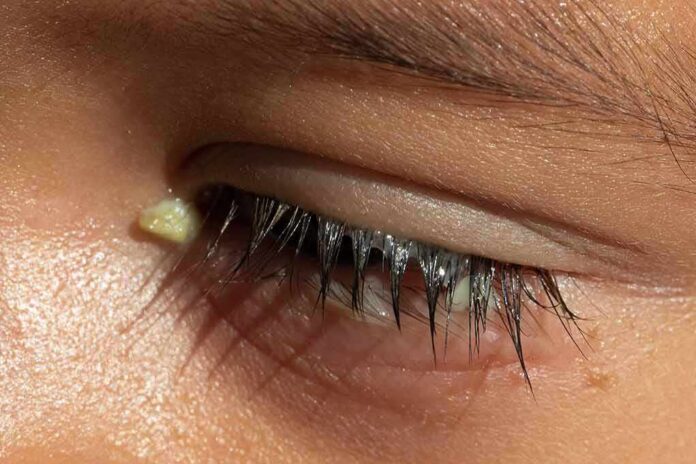
Tiny eight-legged mites are living inside your eyelash follicles right now, and that is not a myth, it is basic human biology.
Quick Take
- Demodex mites naturally live in human eyelash follicles and oil glands, and most adults carry them without ever knowing it
- Doctors say having mites is normal, but a heavy buildup can cause itchy, red, flaky eyelids called Demodex blepharitis
- Prevalence climbs sharply with age, from under 27 percent in young adults to over 80 percent in people over 60
- A simple eyelash sample under a microscope is the only way to confirm mites, and treatment options now exist
What The Video Highlighted About Lash-Dwelling Mites
The Isiah Factor: Uncensored video asked a simple, unsettling question: are microscopic mites living on your eyelashes right now. The short answer from eye doctors is yes, for most adults, and it has always been true. These creatures are called Demodex mites, and they are part of the normal human skin ecosystem, not some rare infection picked up by accident.
The American Academy of Ophthalmology confirms that Demodex mites can live inside eyelash follicles, with one species in particular, Demodex folliculorum, closely tied to the lash itself. Cleveland Clinic backs this up, identifying the same species as a resident of the eyelash follicle in the vast majority of adults. This is not fringe speculation. It is settled dermatological and ophthalmic fact.
Two Mite Species, Two Different Addresses On Your Face
Doctors actually track two separate species living on humans. Demodex folliculorum tends to cluster right around the base of eyelashes, while Demodex brevis prefers the deeper oil-producing glands tied to the eyelid, known as sebaceous and meibomian glands. Knowing which mite lives where matters because it shapes how doctors diagnose problems and decide on treatment when symptoms actually show up.
Having mites present is not the same as having a disease. Eye doctors are careful to separate ordinary colonization, which nearly everyone has to some degree, from overgrowth that causes real irritation. The distinction hinges on density. A few mites quietly living in a follicle cause no trouble. A heavy population crowding the same follicle can trigger chronic eyelid inflammation known as blepharitis.
The Telltale Sign Doctors Actually Look For
There is a visible clue that tips off eye doctors long before a microscope comes out. Waxy, cylinder-shaped sleeves called collarettes form around the base of the eyelash. The Academy of Ophthalmology explains these sleeves are made of mite waste mixed with flaky skin debris, and their presence is a strong hint of a mite problem even before lab confirmation.
Confirming the diagnosis is straightforward. A doctor plucks an eyelash and examines it under a microscope, looking directly for mites clinging to the follicle. A slit-lamp exam, a standard tool in any eye clinic, can also spot the telltale debris at the lash base without pulling a single hair. This is testable science, not guesswork dressed up as medicine.
Why Age Changes Everything About Your Odds
Mite prevalence is not static across a lifetime, and the numbers climb sharply with age. Research shows younger, university-age populations carry Demodex at rates between just 2 and 27 percent. That number jumps past 80 percent in people over 60, and some studies put it near 100 percent in people over 70. Older skin simply hosts more mites, likely tied to changes in oil gland activity over decades.
The scale of the condition is bigger than most people assume. Researchers estimate roughly 7 million Americans could benefit from treatment for Demodex blepharitis, yet only about 1.5 million have actually been diagnosed and treated. That gap suggests millions of people are living with itchy, irritated eyelids without realizing mites are the root cause.
Where The Science Still Draws A Careful Line
Eye doctors are upfront that mites alone do not prove disease. The Academy’s own clinical reference notes that Demodex turns up in patients with no symptoms at similar rates to those who do have blepharitis, so its exact role in causing the condition has not been fully pinned down. That one honest caveat matters, because it keeps the conversation grounded instead of sliding into pure alarm.
The takeaway is less about panic and more about awareness. Mites on your lashes are a normal part of being human, present on nearly everyone eventually. What actually warrants a trip to the eye doctor is persistent itching, redness, or flaking at the lash line, the signs that colonization has tipped into something that needs real treatment.
Sources:
youtube.com, aao.org, eyewiki.aao.org, ajmc.com