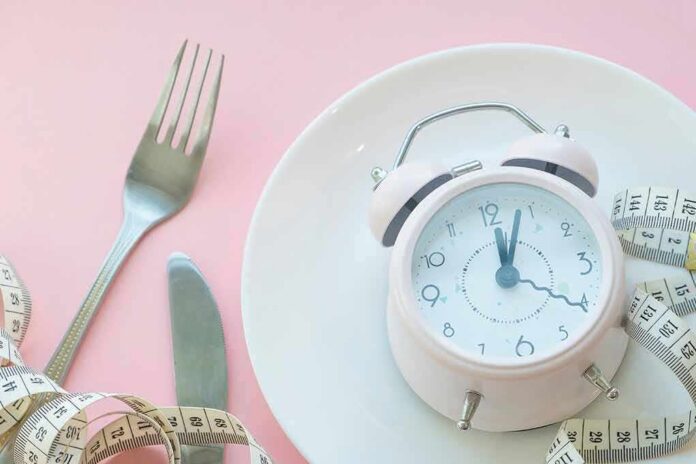
Skipping meals can trim your waistline, but if you ignore one simple rule, it can quietly trim your muscles too.
Quick Take
- A review found that people following intermittent fasting sometimes lost lean muscle, especially when they fell short on protein.
- Randomized trials show the muscle loss risk disappears when dieters eat enough protein and keep lifting weights.
- Shorter eating windows can make it harder to hit daily protein goals, even when total muscle gains stay similar.
- Bigger reviews of fasting studies found no real difference in muscle mass compared to regular calorie-cutting diets.
What The Research Actually Found About Fasting And Muscle
A widely cited review found that both younger and older adults lost some lean muscle while fasting, and tied the risk to low protein intake during calorie cuts. That is not a reason to panic. It is a reason to pay closer attention to what you eat during your window, not just when you eat it. The fasting itself is not the enemy. Running short on protein is.
Think of it like a factory with limited shipping hours. If the trucks still deliver the same amount of material each day, production keeps humming. Squeeze the schedule without adjusting the supply, and shelves run empty. Muscle works the same way. Your body needs steady protein to repair and build tissue, no matter how many hours you give it to eat.
Why Squeezing Your Eating Window Can Squeeze Out Protein
A twelve-week trial found that people on a restricted eating schedule ate noticeably less protein than a control group, even though both groups built similar muscle over time. That gap matters more for people who are not deliberately tracking protein. Fewer hours to eat often means fewer chances to hit protein targets, especially for anyone skipping breakfast and rushing through one evening meal.
A separate trial in active women found something reassuring. When researchers matched calories and protein between a restricted-eating group and a normal-eating group, both built muscle at the same rate. Fasting did not hold them back. The deciding factor was whether they got enough protein and kept training hard, not what time the clock read when they picked up a fork.
The Bigger Studies Push Back Against The Muscle-Loss Fear
A 2020 review of human studies combining fasting with resistance training found that lean muscle was generally preserved. The one study in that review that did show muscle loss involved unreported protein intake and unusually steep weight loss, not fasting on its own. That detail matters. It points to diet quality and training, not the clock, as the real driver of outcomes.
A twelve-week trial comparing 5:2 fasting against standard daily calorie cutting found nearly identical results in muscle quality and strength, as long as participants ate at least 1.4 grams of protein per kilogram of body weight and kept lifting. Another review focused on older adults found equal muscle preservation between fasting and non-fasting groups when protein intake sat between 1.6 and 1.9 grams per kilogram daily. The pattern keeps repeating across different studies and age groups.
A 2025 trial added one more wrinkle worth knowing. Young women who fasted earlier in the day lost more weight than those eating later, without losing muscle thickness or endurance. Timing may shape how much fat you lose. It does not appear to decide whether your muscle survives the process, as long as the fundamentals stay in place.
The Bottom Line For Anyone Trying Intermittent Fasting
None of this means intermittent fasting is risk-free or that it guarantees muscle loss either way. The honest takeaway is conditional, not absolute. Fasting narrows your eating hours, and narrower hours can make it easier to shortchange protein without noticing. Hit your protein number, keep lifting weights, and the clock stops being the threat. Ignore protein, and the clock was never really the problem to begin with.
Sources:
mindbodygreen.com, ncbi.nlm.nih.gov, pubmed.ncbi.nlm.nih.gov, link.springer.com, sciencedirect.com, pubmed-d.ncbi.nlm.nih.gov