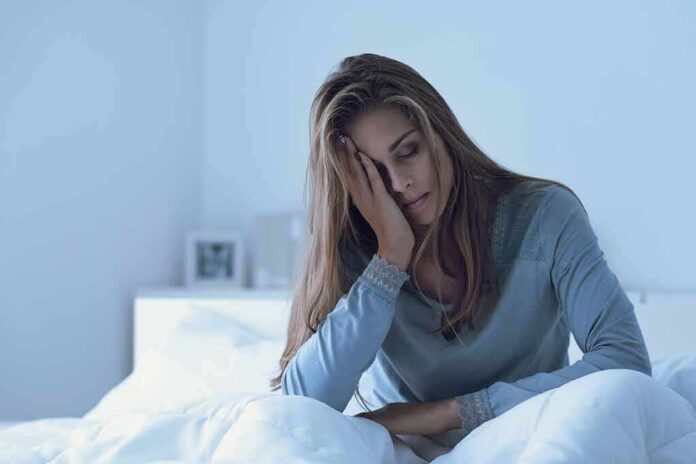
The biggest reason you drag through Mondays might not be how many hours you sleep, but when you sleep them.
Quick Take
- Doctors call the gap between weekday and weekend sleep times “social jetlag,” and it throws off your internal clock even if you get plenty of hours.
- Sleeping in on weekends to “catch up” can make Monday fatigue worse, not better.
- Researchers link this pattern to daytime sleepiness, poor mood, and lower quality sleep overall.
- Most working adults in industrialized countries deal with some version of this shift, often without realizing it.
What Social Jetlag Really Means
Social jetlag happens when your sleep schedule on workdays doesn’t match your schedule on days off. Scientists measure it by comparing the midpoint of your sleep on a workday to the midpoint on a free day. A big gap between those two numbers means your body clock is getting yanked in two directions every single week.
That constant back-and-forth isn’t a minor inconvenience. Researchers say irregular sleep timing actually disturbs the circadian clock itself, the internal system that controls when you feel alert and when you feel sleepy. Unlike jet lag from a plane trip, this version repeats every week, which means the body rarely gets a chance to fully reset.
The label sounds technical, but the feeling is familiar to almost everyone. You stay up late Friday, sleep in Saturday and Sunday, then struggle to get up for work Monday morning. That struggle has a name, and it’s not simply “not enough sleep.” It’s a mismatch between your body’s rhythm and your calendar’s demands.
Why Weekend Catch-Up Sleep Backfires
Many people treat weekend sleep-ins as a fix for a tiring week. Sleep researchers describe a different outcome. Shifting your wake time later on weekends, then snapping back to an early alarm on Monday, almost always builds up chronic sleep debt over time. That debt shows up as fatigue, daytime sleepiness, and trouble falling asleep at night, even in people who technically logged enough hours in bed.
The American Academy of Sleep Medicine has studied this pattern directly. Their research ties social jetlag to increased sleepiness and fatigue, along with worse mood and poorer overall health outcomes. That’s a strong statement from a leading medical group, and it points to timing, not just total hours, as a real driver of how tired people feel.
How Common This Problem Actually Is
This isn’t a rare quirk affecting a small group of night owls. A timely review of the research found that two-thirds of working and studying adults in industrialized countries experience social jetlag, often for years at a stretch. Many of them likely have no idea that their weekend sleep habits are quietly working against their weekday energy levels.
Health experts who study sleep patterns consistently point to one practical fix: keep wake and sleep times steady across the whole week, weekends included. One sleep expert put it plainly in health reporting, advising people to fall asleep and wake up around the same time every day, even on Saturday and Sunday. It’s a simple rule, but it directly targets the mismatch driving so much daytime exhaustion.
For anyone who eats well, exercises, and still can’t shake that midweek fog, the schedule itself deserves a hard look. Bedtime gets most of the attention in sleep advice, but consistency across the whole week may matter more. Locking in the same wake-up time on Saturday as on a Tuesday won’t feel fun at first, but the research suggests it pays off in steadier energy and better mood by the following week.
None of this means an occasional late night ruins your health. The pattern that matters is the repeated, weekly swing between two very different schedules. Treating weekends as a separate time zone from the workweek is the habit worth breaking, and it’s a far more fixable problem than most people realize once they know what to call it.
Sources:
mindbodygreen.com, pmc.ncbi.nlm.nih.gov, cnn.com, sciencedirect.com, aasm.org