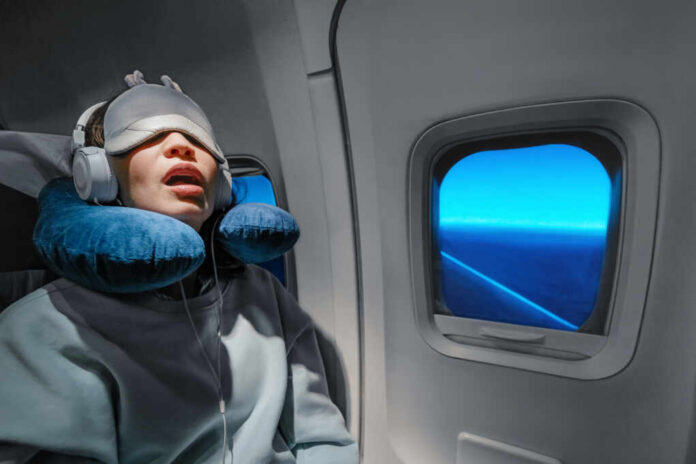
Your most “movie-like” dreams might be the very thing that makes sleep feel deep, even when your brain looks strangely awake.
Quick Take
- A PLOS Biology study tied immersive, vivid dreaming during non-REM sleep to people reporting deeper, more restorative sleep.
- Researchers woke 44 healthy adults more than 1,000 times across four nights while tracking brain activity with high-density EEG.
- The strongest link showed up in NREM2, a stage many people treat as “light sleep,” challenging that assumption.
- Fragmented thoughts and “watching yourself sleep” feelings tracked with shallower sleep perception, not deeper rest.
The Surprise Hiding in “Light Sleep”: NREM2 Can Feel Profound
The study’s headline isn’t that dreams exist outside REM. Sleep scientists have known for years that people can dream in non-REM sleep, too. The jolt comes from where the effect landed: NREM2. Many wearables lump NREM2 into the “not very important” bucket because it lacks the dramatic slow waves of classic deep sleep. Yet participants who reported immersive dreams during NREM sleep—especially NREM2—also reported a stronger sense of deep, restorative sleep.
That combination should make any practical sleeper sit up—briefly, then hopefully fall back asleep. People often wake up anxious after vivid dreams and assume the dream caused poor sleep. This work suggests the opposite can be true: vivid, story-like dreaming may arrive as the mind’s way of keeping you down, not pulling you up. The implication isn’t mystical; it’s mechanical, rooted in how the brain manages arousal.
How the Researchers Cornered Dreams Without Chasing Them
Dream research usually suffers from a basic problem: you can’t measure a dream directly, and memory evaporates fast. The team in Lucca, Italy tackled that with brute-force rigor. They brought in 44 healthy adults for four nights, recorded 196 nights of high-density EEG, and performed more than 1,000 awakenings during NREM sleep. Each awakening forced a simple report: what was going on in your mind, and how deep did sleep feel just before we interrupted you?
Those repeated awakenings matter because they reduce the usual “morning storytelling” problem. The study wasn’t about dream symbolism or therapy; it was about immediate subjective sleep depth. The researchers compared reports of immersive dreaming—vivid, emotionally intense, narrative-rich experiences—against less immersive mental activity like scattered thoughts. They also tracked moments of meta-awareness, when people felt they were monitoring their sleep or thinking about the fact they were sleeping.
Dreams as a “Guardian of Sleep,” Not a Sleep Thief
The core finding reads like a rebuttal to every groggy complaint that starts with, “I dreamed all night, so I must not have slept.” Immersive dreams aligned with people feeling more deeply asleep. By contrast, fragmented thought, rumination-like mental noise, and meta-aware reflection aligned with shallower sleep perception. The researchers framed immersive dreaming as a potential buffer—a mental state that helps the brain ride out fluctuations that might otherwise tilt you toward awakening.
This echoes an older idea from psychoanalysis: dreams as “guardians of sleep.” You don’t need to buy Freud to appreciate the modern version. A brain that can spin a coherent inner world may be better at staying disengaged from the external world—light, sound, discomfort, tomorrow’s worries. The appeal is straightforward: the brain doesn’t waste energy for fun; if vivid dreaming tracks with deeper felt rest, it likely serves a stabilizing purpose.
Why “Wake-Like” Brain Activity Doesn’t Automatically Mean Bad Sleep
Many people assume deep sleep equals low brain activity and unconscious blankness. EEG research helped build that intuition: slow-wave activity has long served as a marker of deep sleep. This study complicates the picture because immersive dreams appeared alongside elevated activity that can resemble wakefulness. That sounds alarming until you remember the REM “paradox”: REM sleep often shows wake-like patterns, yet many people wake from it feeling mentally refreshed.
The better question becomes: what kind of activity is it? A busy brain isn’t always an agitated brain. The study suggests that the quality and organization of mental experience—immersion versus fragmentation—matters for how restorative sleep feels. People can lie in bed for eight hours and still feel cheated if their mind never “lets go.” These findings offer a plausible pathway: coherent immersion may be the letting-go signal, even when the EEG looks lively.
What This Means for People Who Wake Up Tired Anyway
For adults over 40, the stakes are practical. Sleep becomes a negotiation with aches, midnight bathroom trips, stress, and the creeping suspicion that “deep sleep” is a youth-only luxury. This research won’t magically fix insomnia, and it doesn’t claim that chasing vivid dreams will cure anything. It does provide a saner interpretation of a common experience: waking after intense dreams doesn’t automatically mean the night was ruined.
It also warns against a modern trap: outsourcing your sleep judgment to a gadget. Wearables may score your night harshly if they interpret certain patterns as “too awake,” while your subjective experience says you slept deeply. The study’s whole premise centers on that mismatch. A reasonable next step—especially for clinicians—is to pair objective measures with the person’s report instead of treating subjective sleep depth as unreliable noise.
The Next Frontier: Measuring Sleep Quality Without Losing Common Sense
The research opens two doors at once. One leads to better sleep science: models that integrate dreaming, arousal regulation, and why sleep pressure declines across the night yet sleep can still feel deep. The other leads to sleep culture, which desperately needs recalibration. People have been trained to fear normal sleep experiences—dreams, brief awakenings, variable nights—then wonder why bedtime turns into performance anxiety.
Dreaming may still correlate with stress in some contexts, and nightmares remain a different category with their own clinical concerns. The study’s narrower point holds: immersive non-REM dreams correlated with deeper perceived sleep, while fragmented mental activity correlated with shallower perceived sleep. That’s a clean, testable claim—and it’s the kind that can save a lot of people from misreading their own nights.
Sleep has always been partly biology and partly interpretation. This study argues that interpretation isn’t just your morning mood; it tracks something real about what your brain was doing to keep you asleep. If dreaming is sometimes the mind’s way of holding the door shut against the outside world, the next time you wake from a vivid scene, a better reaction might be: maybe my brain did its job.
Sources:
Vivid dreams may be the secret to deeper, more restful sleep
Worst sleep ever nights in 2026: what really happens in your body and how to gently come back
Vivid dreams could be key to feeling well rested, new study suggests
Prodromal dreams: can they predict illness?
Immersive non-REM dreams contribute to perceived sleep depth
Dream engineering can help solve puzzling questions
The fascinating neuroscience of lucid dreaming