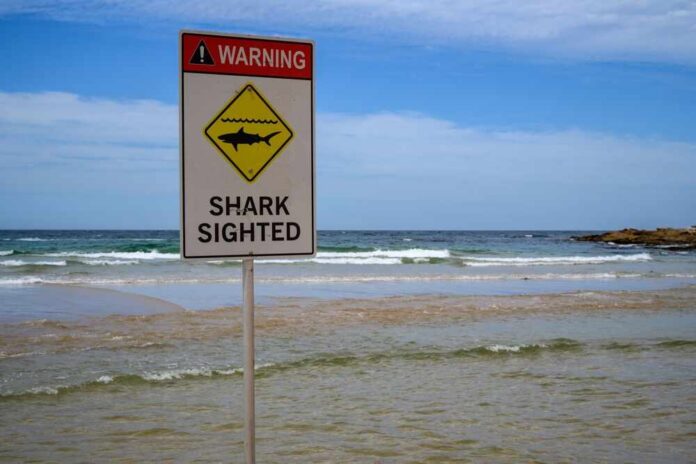
One young mother’s first whispered “I love you” has turned a bloody shark mauling into a battle over what danger at a “safe” Australian beach really looks like.
Story Snapshot
- Leah Stewart woke from a 10-day induced coma and told her family, “I love you.”[3]
- A shark attack during a flagged morning swim cost her an arm and left her in intensive care.[8]
- Media rushed to call it a “great white” attack, before science or officials confirmed a species.[8]
- Hundreds of thousands of dollars in donations now hinge on a powerful public narrative.[8]
A calm morning swim that turned into a nightmare in seconds
Leah Stewart went for a routine morning swim at Coogee Beach, one of Sydney’s most watched and family-friendly strips of sand.[8] She swam close to shore, within the safety flags that tell locals this is the “right” place to be in the water.[8] A shark hit her hard and fast. It mauled her arms and legs, caused major blood loss, and left fractures through her body.[8] In a few seconds, a normal Saturday turned into a fight to stay alive.
Volunteer lifeguard Charlie Verco was paddleboarding nearby when he saw the attack unfold.[6] He rushed to Leah, pulled her onto his board, and kept her head above water while heading for shore.[6] On the beach, members of the public started first aid as emergency crews arrived.[6] Leah received multiple blood transfusions on the sand before she was airlifted to St Vincent’s Hospital in Sydney, where doctors moved quickly to keep her alive and stabilize her shattered body.[9]
A brutal week on life support and the cost of survival
Doctors put Leah into a medically induced coma and placed her on life support to get control of her injuries.[8] Surgeons operated again and again over several days, trying to stay ahead of blood loss, infection risk, and damaged tissue.[2] One arm could not be saved. Her brother says it was amputated after multiple bites destroyed too much muscle, bone, and blood supply.[8] Family updates also describe lacerations, fractures, and extreme blood loss, the kind of damage that leaves a long, painful recovery road.[8]
Her family watched all this from the sidelines in intensive care. They describe a week where machines did most of the work of keeping Leah alive while doctors cleaned wounds contaminated with sand and debris from the beach.[2] Strong antibiotics and repeat surgeries were needed to fight off infection.[2] For many shark victims, this “after” phase is where lives are either saved or lost, and Leah’s case shows how modern trauma care can turn a fatal-looking attack into a survival story.
The three words that cut through the noise and the spin
After about ten days in the coma, Leah’s medical team finally reduced her sedation and removed the breathing tube for a short window.[3] Her brother wrote that this brief break in the haze allowed Leah to speak to her mother and partner Fernando at her bedside.[3] Her first words were simple: “I love you.”[3] She then asked if her baby daughter, August, was okay, showing that her first thought was not the shark or her missing arm, but her child.[2]
‘Overjoyed’: Family of Coogee shark attack victim Leah Stewart sees daughter for first since horror mauling https://t.co/HGqKNVnR0k
— The Right News, Right Now. (@BradPorcellato) June 25, 2026
These three words turned into the headline that rocketed around the world, from Australian outlets to global sites and tabloid websites.[1] The phrase fits perfectly with a media script: a young teacher, a brutal attack, a coma, and a tiny but powerful sign of hope. It also highlights something deeper. Family, responsibility, and love sit at the center of this story, not climate politics or sensational fear. The public responded to that core human moment.
Money, community pressure, and what “safe” really means
Leah’s family set up an online fundraising page to cover months of treatment, rehab, and lost income.[8] Donations quickly surged past the hundreds of thousands mark as the story spread.[8] People are generous, and the need is clear, but large sums always raise fair questions about narrative. The more shocking the attack sounds, the more money tends to flow. That does not mean the family is misleading anyone, but it does mean readers should separate confirmed facts from dramatic flourishes before they jump to policy demands.
At the same time, the Coogee community held solidarity swims to “reclaim” the beach and show it remained safe for families.[1] Thousands joined in. That kind of civic courage is admirable, but it can also drown out skeptical voices who ask hard questions about patrols, technology, and risk after a serious shark bite.[16] Experts point out that the chance of any one person being bitten by a shark is still tiny compared with drowning.[16] Both truths can live together: beaches are generally safe, and rare, brutal attacks like Leah’s deserve honest debate about how we share the water with large predators drawn closer by changing seas.[17]
Sources:
[1] Web – Shark attack survivor wakes from 10-day coma and shares first words …
[2] Web – Coogee Beach shark attack victim Leah Stewart briefly … – ABC News
[3] Web – $300k Raised for Young Mother Mauled by Great White Shark – Surfer
[6] YouTube – Coogee Shark Attack Victim Leah Stewart’s Family Confirms Young …
[8] Web – Sydney Beach Reopens Under Heavy Police Patrols – Marine Link
[9] YouTube – Shark attack at Coogee Beach leaves 35yo with critical injuries
[13] Web – Watch as emergency response teams deploy following a shark …
[15] Web – Police are investigating reports of a shark attack on a swimmer at …
[16] Web – 4 shark bites in 48 hours: how what we do on land may shape shark …
[17] Web – Fatal attack revives debate over controversial shark nets in Australia
[18] YouTube – Australia’s Shark Attack Surge: What’s Really Behind It