The brain food that helps a toddler grow is not the same brain food that keeps a grandmother sharp at 75, and a new review of 54 studies spells out exactly why.
Quick Take
- A review of 54 studies found brain-boosting foods differ by life stage, not one-size-fits-all.
- Animal-derived foods matter most during the first 1,000 days of life and early development.
- Leafy greens, nuts, berries, and fish show up most often in older-adult brain health research.
- Federal aging experts back similar patterns, pointing to Mediterranean- and MIND-style eating.
- Most of this evidence comes from observation, not strict lab experiments, so it shows links, not proof.
A Review That Breaks Brain Food Down By Age
Researchers behind the new review did not ask the usual question of what food is best for the brain. They asked when. The team screened a pool of research down to 54 qualifying studies, split between 8 broad conceptual papers and 46 studies focused on specific foods. They then mapped findings across five separate life stages, from infancy through old age.
Those five stages were the first 1,000 days of life, school age, adolescence, adulthood, and older adulthood. That framework matters because a brain building new connections in infancy has very different needs than a brain trying to protect existing ones decades later. Treating every age group the same, the review suggests, misses how nutrition actually works across a lifetime.
During the first 1,000 days, the review points to animal-derived foods as especially important for brain development. This stage covers pregnancy through a child’s second birthday, a window widely recognized as critical for rapid brain growth. The review’s framing lines up with decades of nutrition science showing early-life nutrients shape long-term cognitive wiring in ways later diet changes cannot fully reverse.
What Shifts By The Time You Hit Your Golden Years
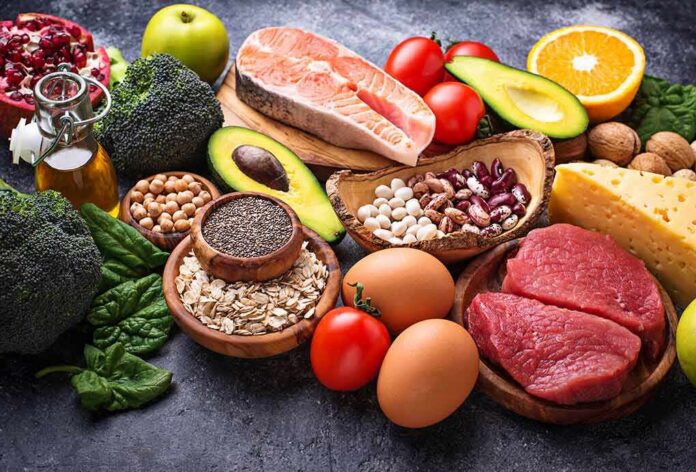
Among older adults, the review found leafy greens, nuts, and other plant-based foods linked most often to healthy cognitive aging. Berries and fish also showed up repeatedly across the older-adult research. This mirrors what neurology experts have said for years when asked directly about brain food, often naming berries, fatty fish, and fermented foods like kefir for their antioxidants and healthy fats.
The pattern tracks closely with federal guidance. The National Institute on Aging notes that Mediterranean-style eating, built around fresh produce, whole grains, healthy fats, and fish, shows up again and again in research on healthy aging. The same agency highlights the MIND diet, a hybrid of Mediterranean and DASH eating styles, as a standout approach tied to slower cognitive decline.
A separate large-scale study backs this up with real numbers. Researchers tracking more than 159,000 adults with an average starting age of 44 found the DASH diet carried the strongest and most consistent link to lower cognitive decline among six eating patterns tested. That kind of sample size gives the finding real weight, even though it remains an observed pattern rather than a controlled experiment.
Why The Science Comes With One Honest Caveat
Most of this research tracks what large groups of people already eat and then compares their brain outcomes years later. That approach is powerful for spotting patterns, but it cannot fully separate diet from other habits like exercise, income, or education that often travel alongside healthy eating. One randomized trial testing the MIND diet directly found smaller cognitive differences between groups than the observational data alone would suggest.
None of that undercuts the core finding here. Multiple reviews, a federal health agency, and a massive 159,000-person study all point the same direction for older adults: vegetables, nuts, berries, fish, and whole grains show up as the consistent winners. The honest takeaway is practical, not complicated. Feed growing children plenty of protein and animal-based nutrients, and feed aging brains more plants, fish, and nuts. Common sense diets, backed by real data, tend to beat fad diets every time.
Sources:
mindbodygreen.com, nia.nih.gov