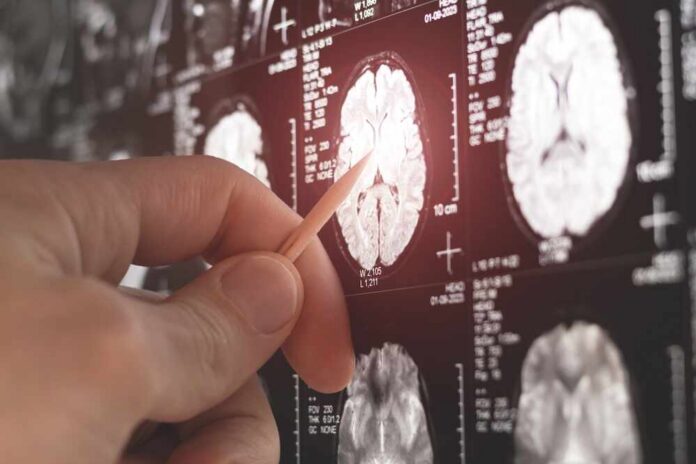
Your brain’s hidden clock is ticking faster than you think, and scientists can now read it from a single MRI scan years before dementia knocks.
Story Snapshot
- AI tools like USC’s 3D-CNN and Duke’s DunedinPACNI measure brain aging pace from routine MRI scans.
- These predict cognitive decline, dementia, frailty, and even mortality years in advance.
- Non-invasive scans reveal accelerated aging in healthy people, opening doors to early lifestyle interventions.
- Tools work for both normal brains and those with impairment, advancing personalized medicine.
- Faster brain aging correlates directly with higher disease risk, urging midlife action.
Breakthrough AI Tools Revolutionize Brain Aging Measurement
USC researchers Andrei Irimia and Paul Bogdan developed the 3D-CNN model in February 2025. This AI analyzes over 3,000 MRI scans from cognitively normal adults. It compares baseline and follow-up images to quantify neuroanatomic changes precisely. The model produces saliency maps highlighting key brain regions driving aging rates. Red regions signal aging in 70-year-olds; blue ones dominate in 50-year-olds. This reveals age-specific vulnerabilities invisible to the naked eye.
Duke University team, including Ahmad Hariri, Terrie Moffitt, Max Elliott, and Ethan Whitman, launched DunedinPACNI on July 1, 2025, in Nature Aging. This tool processes 315 structural measures from a single MRI scan. Trained on 20 years of data from 860 Dunedin Study participants tracking 19 health biomarkers, it predicts cognitive impairment, brain atrophy, dementia, physical frailty, poor health, future diseases, and mortality. Validation spans tens of thousands across multiple studies.
From Research Labs to Clinical Reality
Dr. Andrei Irimia declares this a novel measurement changing brain health tracking in labs and clinics. Knowing your brain’s aging speed empowers proactive steps. Dr. Ahmad Hariri highlights midlife data predicting dementia decades later. These tools correlate faster brain aging with cognitive risks in both healthy and impaired individuals. They now transition to clinical use during routine MRIs.
Traditional methods used cross-sectional scans or DNA methylation, lacking brain-specific precision. Longitudinal studies like Dunedin provided the gold standard data. Multimodal imaging combining MRI, functional connectivity, and EEG boosts accuracy by capturing unique aging patterns. This evolution addresses surging Alzheimer’s and Parkinson’s rates demanding pre-symptomatic detection.
Personal and Societal Impacts Unfold
Healthcare providers spot high-risk patients during standard scans, sparking early interventions. Midlife adults gain motivation for diet, exercise, and sleep changes while still vital. Pharmaceutical firms accelerate trials by pinpointing candidates. Gerontology shifts to quantitative AI assessments integrated into health records. Older adults and caregivers plan ahead, potentially slashing dementia costs through prevention.
Short-term gains include personalized risk profiles over generic predictions. Long-term, early detection enables interventions before irreversible damage. Stanford’s organ-aging research hints at broader applications. Ethical concerns loom over insurance misuse or psychological stress from bad news.
Sources:
USC Leonard Davis School of Gerontology: New AI model measures how fast the brain ages
NIH: Measuring aging from brain scans
Duke Today: Scientists can tell how fast you’re aging from a single brain scan
Medical Xpress: Human and mouse brain aging similarities revealed
PMC: Brain age estimation in neurodegenerative disease monitoring
Stanford Medicine: Brain aging and mortality research
American Brain Foundation: Brain aging explained
PNAS: Brain aging progression research