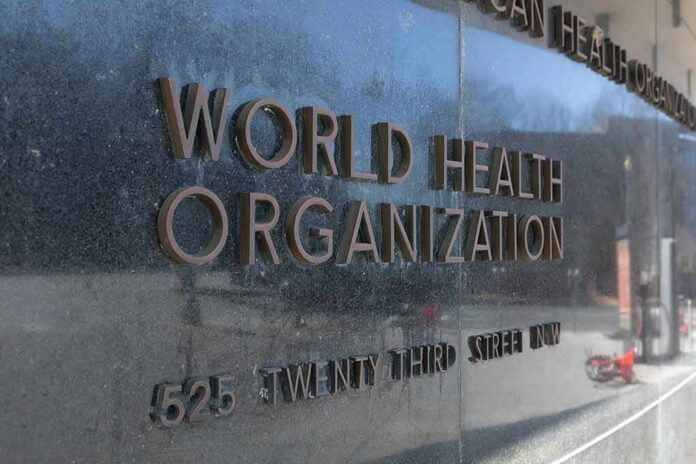
Loneliness kills about as many people each year as a mid-sized country’s entire population, and the World Health Organization says that number keeps climbing.
Quick Take
- The World Health Organization links loneliness to roughly 871,000 deaths a year worldwide, or about 100 an hour.
- Nearly one in six people globally reports feeling lonely, with ties to heart disease, stroke, diabetes, and dementia.
- Health officials want loneliness treated as a medical risk factor, but researchers warn that turning it into a diagnosis could miss the real causes.
- Critics argue the fix isn’t a prescription pad. It’s rebuilding neighborhoods, jobs, and community life.
The Numbers Behind The Warning
The World Health Organization’s Commission on Social Connection released its findings in June 2025, and the figures are hard to ignore. Loneliness connects to higher rates of premature death, cardiovascular disease, stroke, high blood pressure, and diabetes. The report also ties isolation to depression, anxiety, and suicidal thoughts, stating that lonely people face roughly double the risk of developing depression. Earlier research had already flagged loneliness as a nearly 30% bump in premature death risk.
Health officials frame this as a call to action, not a footnote. The commission wants social connection treated with the same urgency as physical and mental health, pushing governments, employers, and health systems to treat isolation as a measurable risk rather than a private sadness. That’s a reasonable instinct. When a problem touches nearly one in six people on Earth, pretending it’s someone else’s business stops making sense.
Why Some Experts Say Slow Down
Here’s the catch. The WHO numbers describe an association, not proof that a doctor’s visit fixes the problem. No clinical trial in the available research shows that screening patients for loneliness, or treating it like a diagnosis, actually lowers death rates or disease. That gap matters. A problem this big deserves solutions, but solutions built on guesswork can waste money and still leave people alone.
A growing body of sociological research pushes back harder. One analysis of United Kingdom health policy argues that “social prescribing,” where doctors refer lonely patients to community groups, quietly shifts a societal problem onto individuals, leaving housing costs, shrinking public spaces, and vanishing community centers untouched. Richard Fried, a physician who studied the issue, put it bluntly: there’s no pill for loneliness, and treating it as an illness is less effective than rebuilding social networks and community infrastructure.
A Social Problem Wearing A Medical Label
Other researchers go further, calling the medical framing itself a distraction. A review titled “Organised loneliness and its discontents” argues that housing, welfare, and education policies often create isolation in the first place, then communities stripped of libraries, parks, and pools get “targeted” with interventions instead of getting those resources rebuilt. A separate social-justice analysis makes a similar case, arguing loneliness falls unevenly along lines of poverty and discrimination, which makes it a policy failure as much as a health one.
This tension isn’t new. Depression, addiction, and obesity all went through the same shift, turning social and economic struggles into diagnoses that healthcare systems could code and bill for. That approach can bring resources and attention, but it can also let policymakers off the hook. If loneliness becomes a pill problem, nobody has to explain why small towns lost their diners, churches, and bowling leagues in the first place.
What A Smarter Response Looks Like
The honest answer sits between both camps. The health risks are real and well documented, so ignoring them would be foolish. But treating loneliness purely as a medical condition, without fixing the neighborhoods, jobs, and institutions that hollowed out community life, treats a symptom while the disease spreads. Families, churches, and local civic groups built resilience against isolation long before any health system got involved. Rebuilding those bonds, not writing more referrals, may be the real prescription worth testing.
Sources:
sciencedaily.com, who.int, apps.who.int, iris.who.int, deseret.com, tandfonline.com, academic.oup.com, scitechdaily.com