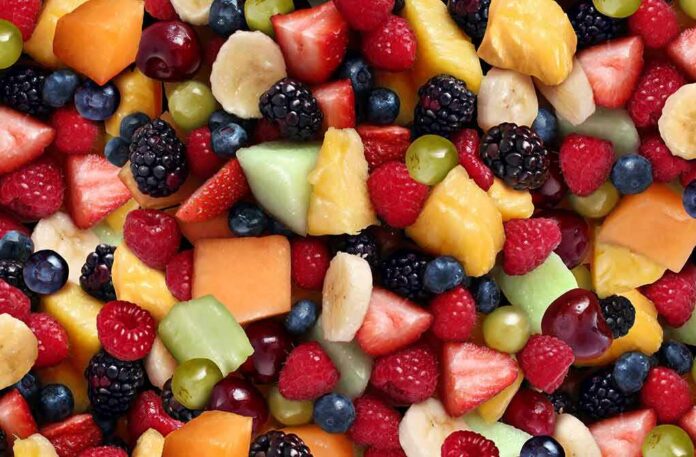
Tea, apples, berries, and dark chocolate all share one hidden ingredient that may help people live longer.
Quick Take
- A UK Biobank study of nearly 125,000 people found that eating a wider variety of flavonoid-rich foods was linked to 6% to 20% lower risk of early death.
- Tea supplied 67% of total flavonoid intake in the study, far more than apples, berries, or dark chocolate.
- A separate study of over 93,000 women found tea and flavonoid-rich foods tied to lower death rates over nearly two decades.
- Scientists say the link is real but based on observation, not a controlled experiment, so it shows connection, not direct proof of cause.
A Massive Study Points To Colorful Foods
Researchers tracked 124,805 adults in the UK Biobank database and compared their eating habits to their health outcomes over time. People who ate the widest variety of flavonoid-rich foods, plant compounds responsible for many fruit and plant colors, had a 6% to 20% lower risk of dying from any cause. They also had lower rates of several chronic diseases compared to people who ate a narrower range of these foods.
Tea, Fruit, And Chocolate Share The Same Compound Family
The study pinpointed exactly where people got their flavonoids. Black and green tea accounted for 67% of total intake, by far the largest source. Apples came in at 5.8%, berries at 1.9%, and dark chocolate at 1.2%. All four foods contain overlapping families of plant compounds, including flavan-3-ols and proanthocyanidins, which give many fruits and plants their color and bitterness.
Because tea dominates the numbers so heavily, it is worth asking whether the benefit comes mainly from tea itself rather than from eating a diverse mix of foods. The study’s design does not fully separate those two possibilities, since fruit and chocolate contribute such a small share of total intake by comparison.
A Second Major Study Backs Up The Pattern
A separate analysis followed 93,145 women for more than 1.8 million person-years as part of the Nurses’ Health Study II. Compared to non-drinkers, regular tea drinkers had a 27% lower risk of death, and regular red wine drinkers had a 40% lower risk, after researchers adjusted for other health factors. Similar patterns showed up for flavan-3-ols, proanthocyanidins, and anthocyanins, the same compound families found in tea, berries, and chocolate.
An 18-year follow-up study found a similar signal using a different measuring stick. People who ate the most total flavonoids were 19% less likely to have died than those who ate the least, in an analysis adjusted only for age. That number fell within a confidence range of 7% to 29%, meaning the true effect could sit anywhere in that span.
Not Every Compound Family Showed The Same Benefit
The research is not uniform across every type of flavonoid. The same 18-year study found no clear link between death rates and other subclasses, including flavonols, flavanones, and flavones. A broader review also pointed to at least one study where total polyphenol intake showed no significant effect on all-cause mortality at all. That inconsistency matters because it shows the benefit is not a simple one-size-fits-all rule for every plant compound.
What The Evidence Can And Cannot Prove
None of these studies randomly assigned people to eat more tea, fruit, or chocolate. Researchers simply tracked what people already ate and compared outcomes years later. That design can reveal strong patterns, but it cannot rule out other explanations, like healthier diets overall, higher incomes, or better access to medical care among flavonoid-heavy eaters. A related umbrella review did find that higher proanthocyanidin levels lined up with lower cardiovascular disease risk, with pooled relative risks of 0.83 for cardiovascular disease and 0.78 for coronary heart disease, but even that review noted the dose-response link was not statistically significant for every outcome tested.
For everyday readers, the takeaway is straightforward common sense rather than a miracle cure. Tea, apples, berries, and dark chocolate all carry a family of plant compounds tied repeatedly to lower death risk across large, long-running studies. Eating a wider variety of these foods costs nothing extra and fits squarely within decades of dietary advice to eat more plants, not fewer. That is a far more honest conclusion than any headline promising a secret to longer life.
Sources:
pmc.ncbi.nlm.nih.gov, link.springer.com, pdfs.semanticscholar.org, researchnow.flinders.edu.au