People who eat more fiber, folate, magnesium, and selenium report fewer signs of depression, according to a new look at federal health data on thousands of American adults.
Quick Take
- A study of 5,068 U.S. adults found four nutrients tied to lower depression scores on a standard mental health survey
- Folate showed the strongest link, while selenium intake was tied to 40% lower odds of depression in top versus bottom eaters
- The data comes from a major government health survey, not a drug trial, so it shows a pattern, not proof of a cure
- Government regulators warn that this kind of food-and-mood research cannot be sold as a treatment claim
What The Government Health Survey Actually Found
Researchers pulled data from the 2017–2018 National Health and Nutrition Examination Survey, a federal project that tracks what Americans eat and how they feel. They looked at 5,068 adults who filled out two detailed food logs and a standard nine-question depression screening called the PHQ-9. Four nutrients stood out: fiber, folate, magnesium, and selenium all moved in the same direction as mood scores, even after researchers adjusted for age, weight, and smoking.
The numbers were consistent, not scattered. For every standard jump in intake, the odds of higher depression scores dropped: folate by 28%, fiber by 23%, magnesium by 20%, and selenium by 19%. Folate carried the strongest statistical weight of the four. Selenium showed the most dramatic split between high and low eaters, with a 40% gap in depression odds between the two groups.
Why This Fits A Pattern Nutrition Science Has Seen Before
This is not the first time food and mood have been linked in survey data. Earlier reviews of federal health records found similar ties between low magnesium intake and higher depression risk, and between selenium levels and fewer depressive symptoms. A broader review of nutrition and depression research found that diet quality overall, not just single nutrients, tracks with mental health outcomes across many studies.
That consistency matters. When four nutrients, studied with the same government data and the same screening tool, all point the same direction, it strengthens the case that diet and mood are connected in some real way. Conservative, common-sense readers should like that this isn’t one flashy headline from a single small study. It’s a repeat signal showing up in a large national sample.
What This Study Cannot Tell You
Here’s the catch, and it’s an important one. This type of study takes a snapshot in time. It cannot say whether eating more fiber and selenium makes people happier, or whether people who already feel worse eat differently in the first place. The researchers measured diet and mood at the same moment, so cause and effect stay an open question.
The food logs also relied on just two days of self-reported eating, which is a thin slice of someone’s actual diet over months or years. And the depression measure was a nine-question screening tool, not a clinical diagnosis from a psychiatrist. Those are not reasons to dismiss the findings. They are reasons to read them as a strong clue, not a verdict.
The Line Between A Dietary Clue And A Health Claim
Federal regulators have drawn a clear line here, and it’s worth remembering. The Food and Drug Administration has stated plainly that observational studies like this one “cannot provide causal evidence” and have limited power to prove that a nutrient treats a condition. The Federal Trade Commission has likewise warned that food and supplement marketers cannot turn a population association into a therapeutic promise without real experimental backing.
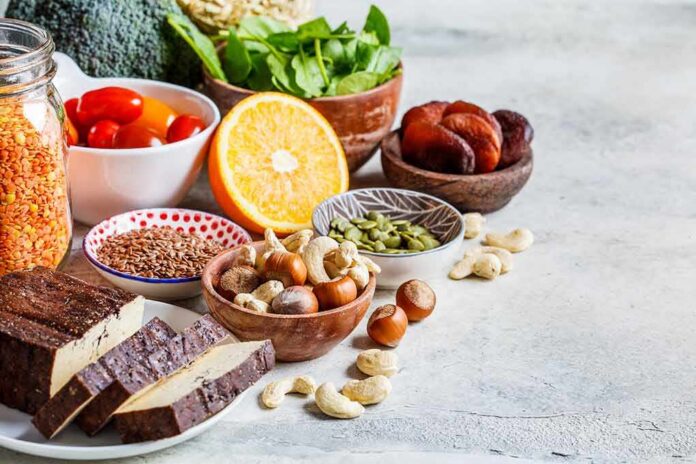
That matters because headlines about “foods linked to better mood” tend to drift into supplement aisles fast. Nobody should swap their antidepressant for a fiber smoothie based on survey data. But nobody should ignore the signal either. Eating real food with fiber, folate, magnesium, and selenium, think beans, leafy greens, nuts, and seafood, carries no downside and plenty of upside regardless of what future trials confirm about mood.
What Comes Next For This Research
The honest next step is a real experiment. Scientists would need to take people already diagnosed with depression, randomly assign some to a diet built around these four nutrients, and compare outcomes against a control group over months, not days. That kind of trial would finally answer whether the food causes the mood lift or just rides alongside it.
Until then, this NHANES snapshot stands as a solid, repeatable signal worth taking seriously, especially for anyone already trying to eat better. It just isn’t a prescription. The difference between “associated with” and “proven to treat” is exactly the gap regulators exist to police, and it’s worth keeping that gap in mind the next time a wellness headline promises more than the data behind it can deliver.
Sources:
mindbodygreen.com, nutritional-psychology.org, pmc.ncbi.nlm.nih.gov, fda.gov, ftc.gov