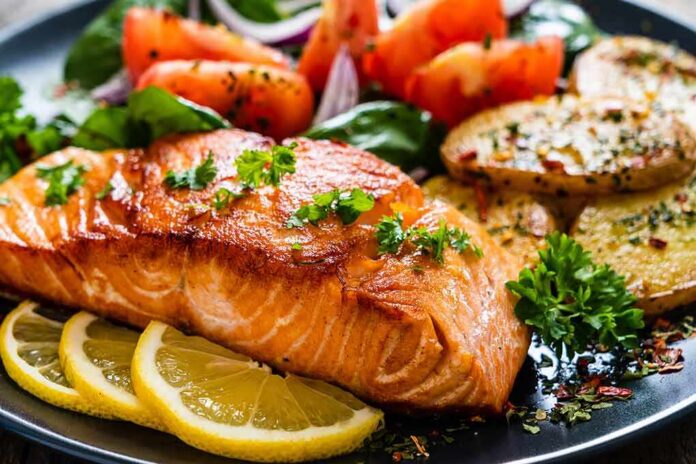
Eating fish twice a week can lower your risk of dying from heart disease by nearly a quarter, according to decades of research on the subject.
Quick Take
- Men’s Health published new fish recipes on August 24, 2026, aimed at helping readers eat more seafood.
- Large research reviews link higher fish intake to lower rates of heart disease and early death.
- Benefits show up most clearly for heart and stroke risk, less so for diabetes or blood pressure.
- Simple, flavorful recipes remove the biggest barrier: not knowing how to cook fish well.
A New Recipe Push Meets Old Science
Men’s Health released a fresh batch of seafood recipes on August 24, 2026, built around one simple idea: eating more fish is good for you, and cooking it doesn’t have to be hard. The article offers three flavor-packed dishes meant to get reluctant home cooks past their fear of fish. That framing lines up with a mountain of nutrition research that has piled up for over two decades.
This isn’t a fringe claim dressed up as science. A major umbrella review pooling 34 separate meta-analyses found that every extra 100 grams of fish eaten per day was tied to a 25 percent lower risk of dying from cardiovascular disease. Another large study found regular fish eaters had a meaningfully lower risk of dying from any cause compared to people who rarely touched seafood.
Why Doctors Keep Pointing to the Same Fish Story
The heart benefits show up most strongly with oily fish like salmon, sardines, and mackerel. One review found oily fish consumption significantly cut triglycerides while raising the “good” cholesterol that helps clear arteries. Public health researchers have gone so far as to say fish intake, especially fatty varieties, should be actively promoted through government dietary policy because the payoff for heart health is that consistent.
Nutrition scientists have also found the case gets stronger the more fish someone eats, up to a point. A dose-response analysis showed each 20-gram daily increase in fish intake was tied to a measurable drop in coronary heart disease risk. Eating fish five or more times a week was linked to nearly a 40 percent lower risk of dying from heart disease compared to people who almost never ate it. That’s not a small effect for something as simple as a dinner choice.
Where the Evidence Gets More Careful
The research isn’t a blank check for every health claim tied to fish. One comprehensive review found no significant effect on hypertension, atrial fibrillation, or type 2 diabetes, even while confirming strong benefits for cardiovascular and all-cause mortality. That distinction matters. Fish helps the heart and extends life expectancy in study after study, but it isn’t a cure-all for every chronic condition Americans worry about.
There’s also emerging evidence connecting fish intake to mental health. A recent meta-analysis found eating roughly 68 grams of fish per day was linked to lower rates of depression, a threshold researchers say could eventually shape dietary guidelines. For readers managing mood alongside physical health, that’s a meaningful data point worth watching as more studies confirm it.
Turning Research Into a Weeknight Habit
Official guidance has long recommended at least two servings of fish per week, with one of those being an oily variety like salmon or mackerel. That’s a modest ask, yet most Americans fall short of it, often because they don’t know how to cook fish without drying it out or making the kitchen smell for a week. Recipe-driven content exists precisely to close that gap between what science recommends and what people actually put on their plates.
Food wisdom applies here just as well as any government food pyramid ever did: eat real food, cook it yourself, and don’t overthink it. Fish tacos, a seared fillet, or a simple stew aren’t complicated projects. They’re proof that the healthiest habits are often the least dramatic ones, built one ordinary dinner at a time.
The takeaway for anyone standing in the seafood aisle wondering if it’s worth the extra effort: the research says yes, consistently, across dozens of studies spanning years and hundreds of thousands of people. Start with one new fish dinner this week. The science suggests your heart will thank you long before you notice.
Sources:
menshealth.com, pubmed.ncbi.nlm.nih.gov, nature.com, mdpi.com, pmc.ncbi.nlm.nih.gov, cambridge.org, sciencedirect.com