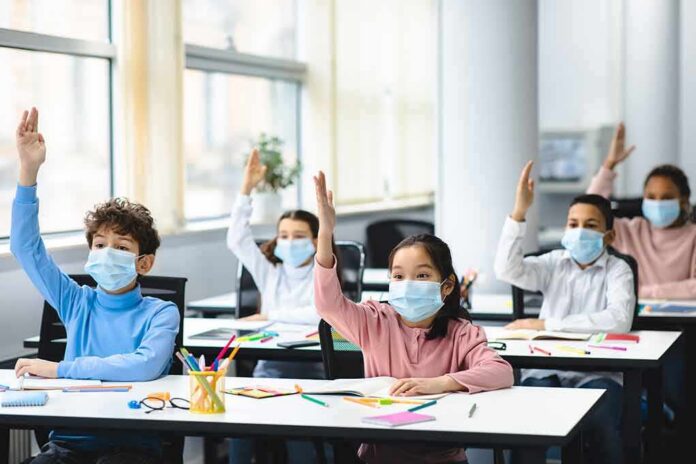
Measles is spreading across America at a level not seen in 35 years, and it is hitting just as millions of kids walk back into classrooms.
Story Snapshot
- The Centers for Disease Control and Prevention (CDC) counted 3,659 confirmed measles cases in the United States by late September 2026, with 40 new outbreaks this year alone.
- Ninety-five percent of confirmed cases are tied to identified outbreaks, showing the virus is moving through connected clusters, not isolated incidents.
- Kindergarten vaccination coverage has slipped to 92.4 percent nationally, down from 95.2 percent before the pandemic, leaving thousands of classrooms below the safety line.
- Public health officials in several states are urging early and extra vaccine doses as schools reopen and exposure risk climbs.
A Fast-Moving Outbreak Meets the School Calendar
Health officials tracked this surge building all summer, warning that travel season would set the stage for a rough fall. By August, case counts had already topped 2,260 across 44 jurisdictions, and officials called the following weeks one of the highest-risk windows for new outbreaks tied to travel. That warning proved accurate. Once classrooms filled back up in late August and September, case totals kept climbing toward the highest yearly count in more than three decades.
Most public schools nationwide had opened for the 2026-27 year by the end of August, and officials say they are watching regions where vaccination coverage is thin. Measles spreads faster than almost any other virus known to man. A single infected student can pass it to a room full of unvaccinated classmates before anyone even shows a rash, which is exactly why school buildings turn a local case into a community outbreak so quickly.
Why Vaccination Rates Are the Real Fault Line
Doctors have long said measles needs vaccination coverage above 90 to 95 percent to keep from spreading person to person. Even a small drop in that number opens the door for outbreaks in a virus this contagious. National kindergarten coverage now sits below that line, and the gap has been widening since before the pandemic, not just this year.
The Washington Post found that the share of counties hitting the 95 percent herd-immunity mark for kindergartners has fallen from half of all counties before COVID-19 to barely more than a quarter today. That is not one outbreak in one town. That is a structural shift in how much of the country now sits exposed heading into flu and cold season, when respiratory illness already keeps nurses’ offices busy.
How Schools and Parents Are Responding
Every state requires public school students to carry proof of measles vaccination, and health authorities lean on that rule hard once an outbreak starts. Officials in several states have already ordered unvaccinated students to stay home during active outbreaks, a tool public health agencies say is their sharpest weapon against classroom spread.
The Maryland Department of Health, along with local counterparts in Illinois, Iowa, Kansas and Pennsylvania, has been coordinating directly with school districts and doctors this fall to push vaccination before exposure happens rather than after. Pennsylvania has gone further, recommending shots for infants younger than the standard vaccination age and encouraging faster second doses in outbreak zones.
After Virginia’s 154-case measles outbreak, confusing federal vaccine guidance and new barriers to the proven MMR vaccine are the last things families need as children head back to school. ➡️ Find link to story in bio pic.twitter.com/Muo5w9Qj0O
— RTD Opinions (@RTDOpinions) September 25, 2026
None of this is complicated. Measles was declared eliminated from the United States back in 2000 because vaccination worked. The virus did not get more dangerous. Coverage simply slipped below the threshold that keeps it contained, and now families are paying the price with exclusion orders, outbreak alerts, and a school year shadowed by a disease most parents assumed was history. Rebuilding that safety margin, one vaccinated kindergartner at a time, is the only path back to the low-case years everyone got used to.
Sources:
time.com, cdc.gov, publichealthcollaborative.org, health.maryland.gov, immune.org.nz, dph.illinois.gov, astho.org, washingtonpost.com