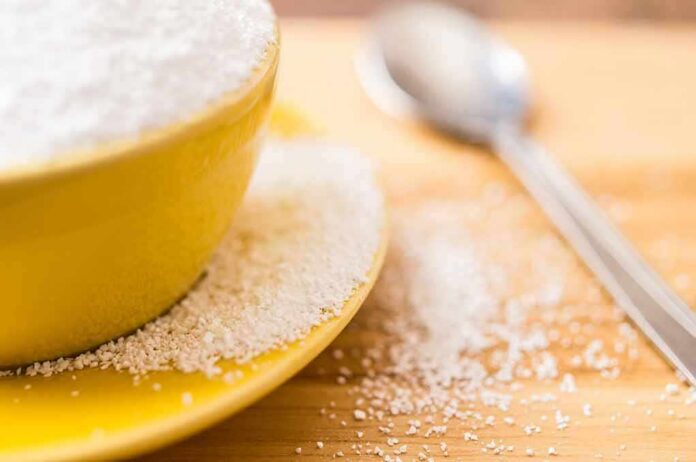
Researchers at Cambridge fed 39 common sweeteners to 25 different gut bacteria in the lab and found that roughly three out of four of them changed how at least one species grew.
Quick Take
- Scientists tested 39 commercial sweeteners against 25 human gut-bacteria strains in lab dishes.
- About three-quarters of the sweeteners changed the growth of at least one bacterial species.
- Pairing sweeteners with other common substances, including a popular antidepressant, often changed the effect.
- One combination strongly suppressed two bacteria linked to healthy gut function.
- The findings come from lab cultures, not from people eating or drinking these products.
What The Study Actually Tested
The research, published in Molecular Systems Biology, did not stop at sweeteners alone. Scientists grew 25 different gut bacteria strains and exposed each one to 39 sweeteners used in food and drinks today. Then they mixed those sweeteners with four other substances people often consume alongside them. That added up to 156 unique combinations tested across all 25 bacteria, producing 3,900 separate measurements.
The headline number from Cambridge’s own summary is striking on its own. Around three-quarters of the 39 sweeteners altered the growth of at least one bacterial species when tested by itself. That means most of the sugar substitutes lining grocery store shelves are not biologically neutral once they reach bacteria in a lab dish.
When Sweeteners Meet Other Everyday Substances
The more interesting twist showed up when researchers combined sweeteners with caffeine, vanillin, the sweetener advantame, and the antidepressant duloxetine. More than 100 of those pairings changed a sweetener’s effect on bacteria compared to testing it alone. Thirty-four combinations made the effect stronger. Sixty-eight made it weaker. Context, it turns out, matters as much as the ingredient itself.
One pairing stood out from the rest. Isosteviol, a steviol-based sweetener, combined with duloxetine to strongly suppress two bacteria species called Roseburia intestinalis and Parabacteroides merdae. Cambridge researchers describe both as important contributors to a healthy gut. Duloxetine is a widely prescribed antidepressant, which means this finding touches millions of people who take both a common medication and a common sweetener without ever suspecting a connection.
Why This Matters Without Overstating It
Lead researcher Dr. Sonja Blasche and her colleagues built this study specifically to look at interactions, not just single ingredients. That approach matters because real diets never involve testing one compound in isolation. People drink diet soda with their morning coffee and take their prescriptions with breakfast every single day. Finding over 100 interaction effects suggests the human gut is handling a far more tangled chemical mix than most nutrition labels ever hint at.
Broader research on sweeteners and gut bacteria has long produced mixed results once scientists move from lab dishes to actual people. A 2025 review of human studies found eight out of fourteen experimental groups showed real microbiome effects from sweeteners, while five showed none and one showed limited impact. Saccharin, sucralose, and stevia did not produce a consistent pattern across those studies. That inconsistency is normal for early-stage microbiome science, not a reason to dismiss new lab findings.
What Comes Next For Consumers And Researchers
This study was conducted entirely in laboratory cultures, growing each bacteria species on its own rather than inside a full human gut community. That is an important and honest limitation, not a knock against the science. Real guts involve competition between hundreds of bacteria species, immune responses, and digestion timing that a petri dish simply cannot replicate.
Scientists tested 39 sweeteners and found many disrupt gut bacteria. Some combos with common meds boosted effects, and one sweetener with an antidepressant reduced beneficial bacteria and diversity. Gut health implications ahead. #GutHealth #Microbiome #… https://t.co/t85UvtxUtA
— Devin Womack (@devinwo) October 18, 2026
Common sense says this finding deserves attention without panic. Nobody needs to toss out their diet soda or stop taking prescribed antidepressants based on a bacteria culture experiment. But the research gives drugmakers, sweetener producers, and regulators a clear road map for follow-up work. Human feeding studies that track real medication use alongside sweetener consumption would tell Americans far more than any lab dish ever could.