Researchers at the University of Alabama in Huntsville have found that low-intensity ultrasound waves can push immune cells away from a damaging, long-term inflammatory state — and that discovery could change how doctors treat joint injuries before arthritis ever sets in.
Story Snapshot
- UAH scientists showed that continuous low-intensity ultrasound can shift immune cells called macrophages from an inflammation-driving state to a tissue-repair state.
- The research targets post-traumatic osteoarthritis, a form of arthritis that often follows joint injuries like torn ligaments or cartilage damage.
- The findings come from lab experiments, not human trials — real-world use is still years away.
- A separate rat study using pulsed low-intensity ultrasound also found reduced joint tissue scarring, adding weight to the approach.
What Macrophages Have to Do With Your Aching Joints
Macrophages are immune cells that act like the body’s cleanup crew. After a joint injury, they rush in to fight damage and start repairs. The problem is that they sometimes get stuck in attack mode. Instead of switching off the alarm, they keep firing inflammation signals. Over time, that chronic inflammation breaks down cartilage and leads to arthritis. This is the central problem the UAH team set out to solve.
Macrophages exist in two rough modes. The M1 state drives inflammation. The M2 state promotes healing. A healthy recovery needs both — but in the right order. The UAH researchers wanted to know whether sound waves could nudge stuck M1 cells toward that repair-focused M2 state. Their answer, based on lab data, was yes.
What the UAH Study Actually Found
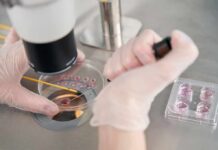
The team exposed M1 macrophages to continuous low-intensity ultrasound and then analyzed changes in the cells’ gene activity. They found that inflammation-related genes were turned down, while genes linked to tissue repair were turned up. The peer-reviewed paper, published in a scientific journal and indexed on PubMed, described this as a shift in the cells’ “transcriptomic profile” — meaning the pattern of genes being read and acted on inside the cell changed. The lead researchers called the results promising for joint healing after injury.
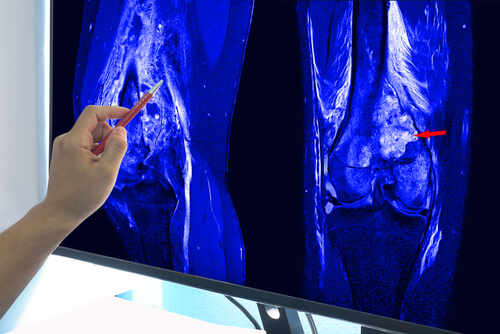
A separate study using a rat model of knee osteoarthritis found that low-intensity pulsed ultrasound reduced scarring in fat tissue inside the knee joint. It did this by lowering the activity of a protein called hypoxia-inducible factor, which drives the kind of tissue thickening that makes joints stiff and painful. The two studies used slightly different ultrasound methods, but both point in the same direction.
Post-Traumatic Osteoarthritis Is the Real Target
Post-traumatic osteoarthritis develops after a specific injury — a torn ACL, a broken bone near a joint, a bad ankle sprain. It accounts for roughly 12 percent of all osteoarthritis cases and tends to strike younger, more active people. Unlike age-related arthritis, it has a clear starting point. That makes it an ideal target for early intervention. If you can calm the immune response right after injury, you may be able to stop the damage before it becomes permanent.
A simple, non-invasive ultrasound treatment could one day help injured joints heal instead of remaining trapped in a cycle of damaging inflammation. Researchers at The University of Alabama in Huntsville found that continuous low-intensity ultrasound encouhttps://t.co/T3cMweH1o2
— Michael W. Deem (@Michael_W_Deem) July 12, 2026
That is the window the UAH team is aiming for. The idea is not to treat arthritis that already exists, but to use ultrasound in the hours or days after a joint injury to keep macrophages from locking into that destructive, long-term inflammatory mode. Think of it as hitting a reset button on the immune response before the damage compounds.
Strong Early Signal, But Human Trials Are Still Ahead
This research is early-stage. The core findings come from cells in a lab dish, not from patients in a clinic. That gap matters. Many treatments that look powerful in lab experiments fail when tested in animals or people. The UAH team has not yet published results from animal trials testing the full arthritis-prevention concept in a living joint. That is the next step, and it is a big one. Readers who have followed medical research for any length of time know that “promising lab results” is a long way from “your doctor can prescribe this.”
Still, the underlying science is sound. Macrophage behavior is well-understood. Ultrasound is already used safely in physical therapy. The idea of using it to guide immune cell behavior — rather than just warm tissue or break up scar tissue — is genuinely new and worth watching. If animal and then human trials confirm what the lab data shows, this could become a simple, drug-free tool that doctors use right after joint surgery or injury to protect patients from a lifetime of pain.
Sources:
sciencedaily.com, huntsvillebusinessjournal.com, scitechdaily.com, louis.uah.edu