

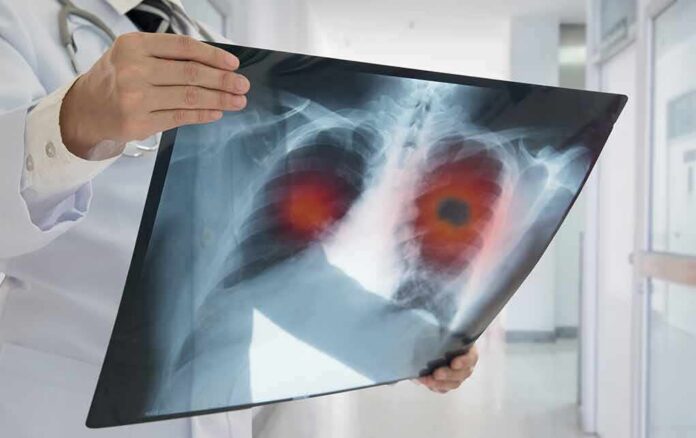
Doctors are watching something strange happen in lung cancer wards: patients who never smoked, ate their vegetables, and did everything right are still getting diagnosed, and a new study says they may have been eating fruits, vegetables and whole grains at higher rates than sicker patients.
Quick Take
- A 2026 study found young non-smokers with healthier diets had higher lung cancer rates, a pattern researchers call “unexpected”
- Scientists suspect pesticide residue on produce, not the healthy food itself, may explain the surprising link
- Decades of other research show the opposite: fruits, vegetables and fiber usually lower lung cancer risk, especially in never-smokers
- Public health groups still tell Americans to eat produce for cancer prevention, and this new finding has not changed that guidance
The Study That Caught Researchers Off Guard
Researchers behind the 2026 report expected the usual story: clean eaters get sick less often. Instead, they found young non-smokers with healthier diets showed higher lung cancer rates than their less health-conscious peers. That is not a small footnote. It is the kind of finding that makes scientists double-check their math before they publish anything.
The team did not claim broccoli causes tumors. They floated a different suspect: pesticide residue clinging to conventionally grown fruits, vegetables, and whole grains. People eating more produce may simply be swallowing more chemical residue along with it. The study, according to public summaries, was not built specifically to test that theory, which leaves the real cause still unconfirmed.
Who Gets Hit Hardest: Women and Never-Smokers
Lung cancer used to be a smoker’s disease in the public imagination. That picture is outdated. Federal health officials now warn that people who never smoked, including many women under 50, make up a growing share of new diagnoses, and the usual suspects are secondhand smoke, diesel exhaust, air pollution, asbestos, and radon, not diet. Coverage of the 2026 finding notes the surprising pattern skewed toward younger non-smoking women in particular.
That detail matters because women who never smoked have long puzzled oncologists. Their lung cancers behave differently, respond differently to treatment, and now appear tied to a dietary pattern nobody expected to be a risk factor. Researchers still need to confirm whether this signal holds up once pesticide exposure, genetics, and environmental factors get properly separated out from diet quality itself.
What Decades of Prior Research Actually Show
Before anyone tosses out their salad, the broader scientific record deserves a hard look. A major systematic review pooling many studies found people eating the healthiest diets had 19 percent lower lung cancer risk than those eating the worst diets, a number that held up even among non-smokers. Earlier never-smoker studies found vegetables, carrots, and non-citrus fruit tied to meaningfully lower risk, not higher.
Another never-smoker cohort found that people following a healthy eating pattern, rich in vegetables, fruit, and low-fat foods, saw a significant drop in lung cancer risk after researchers adjusted for other factors. A large United Kingdom biobank study of more than 100,000 adults reported the same direction: high fruit, vegetable, cereal fiber, and low red meat intake tracked with lower lung cancer rates, while Western-style eating tracked with higher risk.
That is a lot of evidence pointing one direction, and the 2026 finding pointing another. Both things can be true if pesticide exposure, not diet quality, is the hidden driver behind the surprising numbers. Cancer prevention authorities still recommend getting nutrients from real food rather than supplements, and they have not walked back that advice based on one unexpected result.
What Needs to Happen Before Anyone Panics
Don’t throw out the fruit bowl over one study still waiting on its full data release. Researchers need the actual paper, the exact risk numbers, and a breakdown by age, sex, and smoking history before anyone can say what is really driving this pattern. Testing organic versus conventionally grown produce in the same group of patients would settle the pesticide question directly instead of leaving it as a guess.
Until then, the responsible reading is straightforward. Eating real food beats eating processed junk, according to decades of consistent research. But washing produce carefully and pushing for tighter pesticide oversight on imported and domestic crops looks like the smarter response, rather than treating vegetables themselves as the enemy based on one still-unpublished signal.
Sources:
youtube.com, pmc.ncbi.nlm.nih.gov, sciencedaily.com, verywellhealth.com, academic.oup.com, cdc.gov












![Fix Your Plantar Fasciitis Heel Pain [PERMANENTLY]](https://thewellnessjournal.health/wp-content/uploads/sites/3/2026/07/maxresdefault-24-100x70.jpg "Heel Pain Hack Doctors Quietly Endorse")