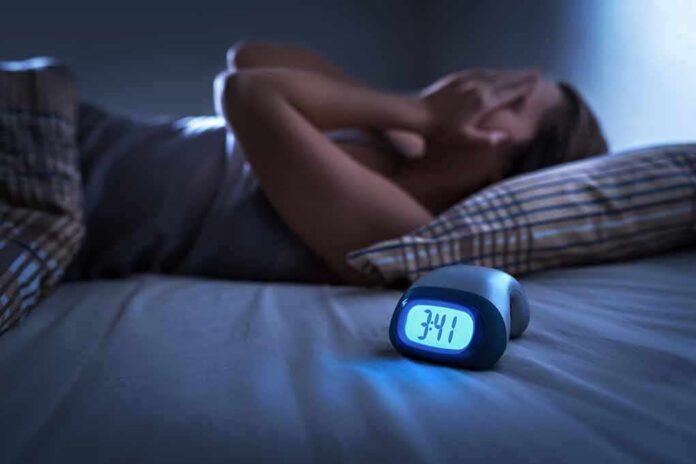
Lying awake at 3 a.m., staring at the ceiling, is the kind of misery that drives people to try almost anything — including picturing a banana, a ball, and a boat until they drift off again.
Quick Take
- Cognitive reshuffling asks you to pick a word, think of unrelated words starting with each letter, and picture each one until sleep returns.
- A clinical psychologist says the trick may work by crowding out anxious, repetitive thoughts without being exciting enough to keep you awake.
- The method traces back to real sleep research from Simon Fraser University, not just social media chatter.
- Current studies focus on young adults falling asleep at bedtime, not older adults jolted awake at night.
- Doctors still point to established insomnia treatments, like getting out of bed when you can’t sleep, as the better-tested option.
What The Technique Actually Involves
Cognitive reshuffling follows a simple script. Pick a word, like “bedtime.” Then think of other words starting with each letter in order, picturing each one in your mind. Start with b, think “ball,” then “banana,” then “boat.” Move to e, and keep going until sleep takes over. Men’s Health walked through this exact example in its coverage of the method.
The idea sounds almost too simple to work. That’s the point. Thea Gallagher, a clinical psychologist at NYU Langone Health, says the technique interrupts the kind of repetitive, emotionally charged thinking that keeps people staring at the clock. Neutral images occupy just enough brainpower to break the loop, without being interesting enough to fully wake you up.
The Research Behind The Viral Trick
This isn’t a brand-new internet invention. It grew out of work by researcher Luc Beaudoin, who published a 2013 paper called “The Possibility of Super-Somnolent Mentation.” That research led to what’s now called the cognitive shuffle, built on a concept known as Somnolent Mentation Theory.
One study tracked 64 students at MacEwan University who were randomly split into groups to test the approach. A separate, larger study followed 154 university students assigned to cognitive reshuffling, a technique called constructive worry, or both combined. Researchers checked back in after one week and again after one month to see how people were sleeping.
Where The Evidence Runs Thin
Both studies focused on college students with an average age under 20. That’s a long way from the 50-year-old waking up at 3 a.m. with a mortgage on his mind. Nothing in the available research proves the technique works the same way for older adults, people with diagnosed insomnia, or anyone dealing with frequent middle-of-the-night wakeups.
There’s another gap worth naming. The research so far centers on falling asleep at bedtime, not on falling back asleep after waking up hours later. Those are related problems, but they’re not identical. Nobody has run a trial measuring whether this specific trick shortens the time it takes to drift off again after a 3 a.m. wakeup.
How It Stacks Up Against Standard Treatment
Sleep doctors have leaned on a different approach for decades: stimulus control. The American Academy of Sleep Medicine recommends getting out of bed if you can’t fall asleep within about 20 minutes, then returning only when you’re sleepy again. The goal is breaking the mental link between your bed and lying awake frustrated.
Creating a sleep schedule and practicing relaxation techniques (like meditation) can help with insomnia. If these remedies don’t work, talk to your doctor. #WomensHealth #MentalHealth https://t.co/DC9UjdWNqV
— Health E Centre (@HealthECentre) October 19, 2026
Cognitive reshuffling works differently. You stay in bed the whole time, just redirecting your thoughts. That makes it easier to try on a rough night, but it also means it hasn’t been tested side by side against the stimulus-control method doctors already trust. For now, it looks like a low-risk mental exercise worth trying, not a replacement for proven insomnia treatment built on decades of clinical study.
Sources:
menshealth.com, aasm.org, summit.sfu.ca