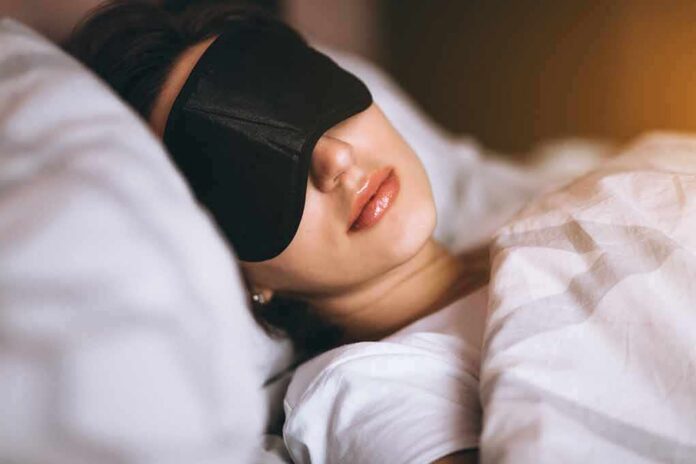
Your face cream cannot do what last night’s seven steady hours just did for your cells.
Story Highlights
- Large UK studies link sound sleep with slower biological aging and longer health span
- Too little or too much sleep tracks with faster aging; the sweet spot sits in the middle
- Poor sleep habits like insomnia and daytime sleepiness tie to earlier health decline
- Objective tracking in tens of thousands backs the sleep–aging connection
What the big studies actually found
Researchers working with the UK Biobank followed hundreds of thousands of adults and kept seeing the same pattern. People who reported strong sleep quality were less likely to hit the end of their health span early. One prospective study of more than 320,000 people found a 15 percent lower risk when sleep quality was healthy. Another analysis linked better sleep to lower “biological age” measures, meaning their bodies looked younger than their years by lab metrics.
Sleep duration told a clear story too. A large 2024 analysis showed a U shape between sleep time and biological aging. Very short nights and very long nights both linked to faster aging. The lowest risk sat in the mid-range, not at the extremes. A separate project mapped aging “clocks” across organs and found the smallest biological age gaps clustered around roughly 6.4 to 7.8 hours per night in mid to late life.
The habits that speed or slow your health clock
The same cohort flagged several sleep behaviors that track with earlier decline. Insomnia or sleeplessness, habitual daytime naps, excessive daytime sleepiness, and trouble getting out of bed were each tied to higher odds of health span ending sooner. That paints a target: consistent sleep, steady alertness by day, and easy wake-ups matter. These are not abstract wellness points. They are concrete signs that your body clock and brain recovery are on track.
Objective measures back this up. More than 80,000 adults wore devices that captured real sleep patterns. The data linked timing, efficiency, and regularity to health-related markers, reducing the “it’s just self-report” worry that dogs many surveys. When both questionnaires and devices point the same way, common sense says take the hint and build your routine around it.
Where “more” is not better
Many people chase extra hours like they chase extra vitamins. The data advise restraint. Both short sleepers and long sleepers showed signs of faster biological aging in the UK Biobank work. Middle-range sleep looked best across sexes and organs in later-life adults. That aligns with day-to-day experience. Too little sleep feels bad. Too much often means you feel sluggish, skip activity, or signal underlying illness. Aim for the lane, not the shoulder.
Sleep quality also matters beyond raw hours. One study of over 400,000 participants linked higher sleep quality to lower “PhenoAge” acceleration, especially in people with higher genetic risk. Translation: even if your genes stack the deck, consistent, high-quality sleep can still help your biology play a smarter hand.
Turn findings into a one-week reset
Pick a wake-up time and defend it. Your body clock anchors to sunrise behavior, not bedtime wishes. Step into morning light for ten minutes, even on cloudy days. Keep caffeine to the morning, and save alcohol for rare nights. Eat your last meal two to three hours before bed. Keep your room dark, cool, and quiet. These simple moves improve continuity and cut daytime sleepiness, the very signals tied to worse health outcomes in the large cohort.
Watch for two checkpoints. First, how fast do you fall asleep? Twenty to thirty minutes is fine. Second, how do you feel at 10 a.m.? If you crave a nap or fight fog, bring your bedtime earlier by fifteen minutes for three nights. Keep adjusting in small steps until morning alertness returns. That puts you nearer the mid-range window that shows the most favorable aging profiles across studies.
Sources:
mindbodygreen.com, pmc.ncbi.nlm.nih.gov, onlinelibrary.wiley.com, pubmed.ncbi.nlm.nih.gov, academic.oup.com, link.springer.com