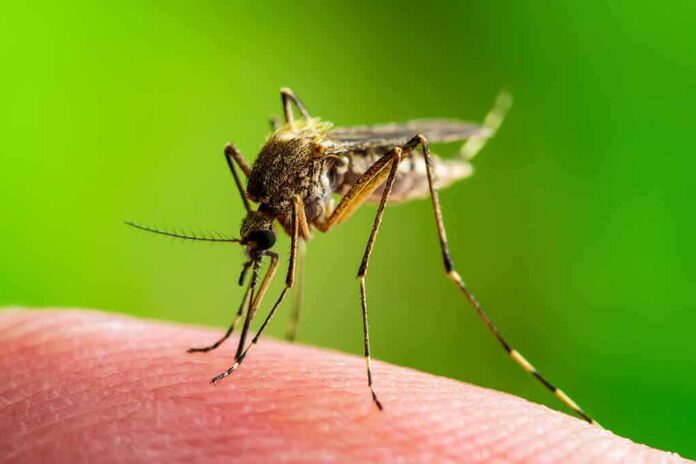
Some people get eaten alive at every backyard barbecue while their spouse walks away without a single bite, and scientists now know why: it’s written in their skin chemistry.
Quick Take
- A 2022 Rockefeller University study found some people attract far more mosquitoes than others, and the difference stays consistent over time.
- Researchers linked high attractiveness to elevated carboxylic acids, a group of compounds released through skin oil.
- The most “attractive” volunteers drew dramatically more mosquitoes than the least attractive in repeated testing over 174 days.
- Later research shows different mosquito species respond to different chemical signals, complicating any single “magnet” explanation.
The Study That Explained Why Bugs Pick Favorites
Researchers at Rockefeller University set out to answer a question anyone who has ever camped, hiked, or grilled outside has asked: why do mosquitoes swarm one person and ignore the next? Led by Leslie Vosshall and Maria Elena De Obaldia, the team ran over 2,330 tests across 174 days, using odor samples collected on nylon sleeves worn on volunteers’ forearms. The results, published in the journal Cell, confirmed the phenomenon is real and measurable.
The team didn’t just confirm that some people get bitten more. They found the pattern held steady for months, meaning a person’s mosquito appeal isn’t random luck on a given evening. It’s a stable trait, tied to something happening on the surface of their skin every single day.
Carboxylic Acids Turn Out to Be the Culprit
Chemical analysis of sebum, the natural oil on human skin, revealed the answer. The National Institutes of Health (NIH) summarized the findings by noting that carboxylic acids were “heavily enriched” in the skin of the most mosquito-attractive volunteers. These acids are a type of fatty compound the body naturally produces and releases into the air around us.
Rockefeller’s own reporting on the study identified 50 distinct molecular compounds elevated in the sebum of high-attracting participants, with carboxylic acids standing out as dramatically higher in that group compared to less-attractive volunteers. Multiple contemporaneous reports described the most attractive individuals drawing up to 100 times more mosquitoes than the least attractive ones, based on the study’s controlled testing.
Why Mosquitoes Bother With Skin Chemistry at All
Mosquitoes don’t hunt randomly. They rely on a stew of signals, including carbon dioxide from breath, body heat, moisture, and skin odor, to zero in on a blood meal. The carboxylic acid findings build on more than a decade of earlier work showing skin bacteria and their metabolic byproducts shape the scent blend mosquitoes key in on.
That earlier science, including studies on skin microbiota published years before the Rockefeller work, already showed that bacteria living on human skin help produce the volatile odors mosquitoes use to find hosts. The 2022 carboxylic-acid discovery refines that picture rather than overturning it, pointing to a specific class of chemicals within a much larger and more complicated scent signature.
Not Every Mosquito Wants the Same Thing
Newer research adds another layer worth knowing. A study covering three dangerous mosquito species found each one gravitates toward different chemical cues, meaning the bug biting you on a porch in Texas may not be chasing the same scent as one buzzing through a jungle in Southeast Asia. One species favored people with little added scent and fewer volatile compounds on their skin, while showing a slight preference for men over women.
Why Different Mosquitoes Prefer Different People
A new study on three dangerous mosquito species finds each one is drawn to different skin chemistry.
👇https://t.co/npuhDCSdut— Epoch Health (@epochhealth) August 27, 2026
That variation matters for anyone shopping for repellent or trying to figure out why one bug spray works great on vacation but fails at home. Different mosquito species, whether it’s the day-biting Aedes aegypti or the malaria-carrying Anopheles, appear to be running their own separate playbooks when it comes to picking a target.
What This Means for the Person Always Getting Bitten
For the millions of Americans who swear they’re mosquito bait every summer, the science backs them up. It isn’t imagination, bad luck, or poor hygiene. It’s biochemistry, largely outside anyone’s control, built into the oils their skin naturally produces. The NIH-funded findings suggest this trait remains steady over long stretches of time, not just a passing phase.
That steadiness is actually useful news. If scientists can pin down exactly which acids and receptor pathways drive the strongest attraction, it opens the door to better repellents, smarter traps, and more targeted mosquito control, especially in regions battling malaria and other mosquito-borne diseases where every bite carries real risk.
Sources:
sciencenews.org, pmc.ncbi.nlm.nih.gov, cen.acs.org, npr.org, biorxiv.org