An 80-year-old Tampa woman has become Florida’s first confirmed dengue death of 2026, a grim milestone in what health officials call the state’s worst local outbreak in years.
Story Snapshot
- Florida health officials confirmed the first dengue death of 2026 in Hillsborough County, the outbreak’s epicenter.
- The victim, identified as Gay Small, 80, of Tampa, died September 4 at Tampa General Hospital.
- Her death certificate listed dengue infection along with septic shock and multi-organ failure.
- Hillsborough, Pasco, and Pinellas counties declared emergencies as case counts climbed past 190 statewide.
A Confirmed Death Ends Weeks Of Investigation
The Florida Department of Health confirmed Friday, September 18, that dengue fever killed a Hillsborough County resident, marking the state’s first confirmed dengue death this year. The announcement followed more than a week of quiet investigation. On September 10, officials said they were actively looking into a Hillsborough County death “possibly associated with a dengue virus infection”. That careful language gave way to certainty once lab results came back.
Local reporting identified the woman as Gay Small, an 80-year-old Tampa resident. The Tampa Bay Times reported she died September 4 at Tampa General Hospital, and her death certificate listed “dengue infection” alongside septic shock and multi-organ failure. Family members told reporters they believe she was bitten by an infected mosquito near her own home, underscoring how close to normal daily life this outbreak has crept for Tampa Bay residents.
Hillsborough County Carries The Heaviest Burden
Hillsborough County has absorbed the overwhelming share of Florida’s dengue cases this year, with reports describing it as the epidemic’s epicenter. County case totals climbed sharply through the summer, moving from 59 to 95 and eventually past 130 locally acquired infections, while statewide numbers topped 190 by late September. One infectious-disease researcher called it “the most locally acquired cases that we’ve seen in the state”.
That surge pushed 2026 past Florida’s previous record of 186 locally acquired cases set in 2023, making this year’s outbreak the largest on record centered in the Tampa Bay region. Unlike past Florida dengue flare-ups, which mostly struck South Florida, this year’s cluster shifted the geographic center of gravity north into Tampa Bay, a trend one expert called genuinely new for the state.
Counties Respond With Emergency Declarations And Spraying
Hillsborough, Pasco, and Pinellas counties each declared local states of emergency as case numbers kept climbing, a step that frees up resources for expanded mosquito control. County and state teams responded with aerial spraying, ground treatments, and expanded mosquito trapping across affected neighborhoods. Since July, 209 Floridians have been hospitalized with dengue fever, far more than any other state has reported this year.
Why Health Experts Say This Pattern Keeps Repeating
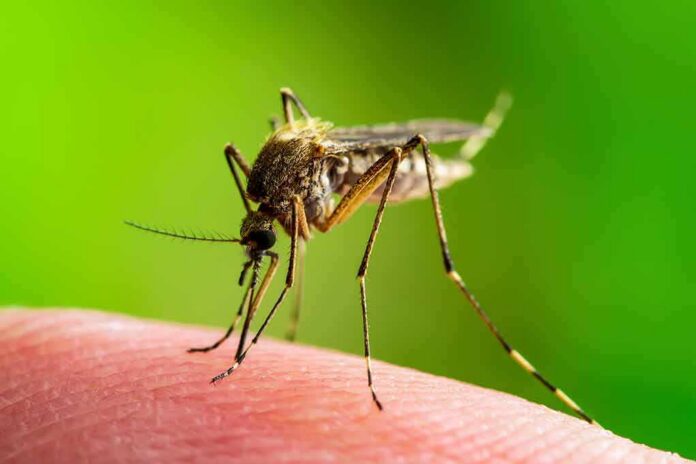
Dengue is spread by Aedes mosquitoes, a warm-weather species that researchers say is expanding its range as the climate warms. Outbreaks typically start when an infected traveler returns to the United States and gets bitten by a local mosquito, which then spreads the virus to others nearby. Florida has seen this cycle before, including a notable Key West outbreak in 2009 and 2010 that marked the first locally acquired dengue cases in the state since 1934.
Health officials stress dengue has not taken permanent hold in the continental United States, but this year’s numbers show how quickly a single imported case can seed a serious local cluster. Three Florida counties now under emergency declarations, a record case count, and one confirmed death together paint a clear picture of a mosquito-borne threat that outpaced prior containment efforts this season.
Florida just recorded its first dengue death in a century, and the virus behind it has a feature almost nothing else in nature has. Surviving your first infection is the single biggest risk factor for dying from your second.
Dengue comes in four versions. When you beat one, your… https://t.co/cjyACU6hnn
— Aakash Gupta (@aakashgupta) September 30, 2026
Floridians living in affected counties are urged to eliminate standing water, use repellent, and report symptoms like high fever, severe joint pain, or rash to a doctor quickly. Early detection matters most for older adults and anyone with underlying health conditions, since severe dengue can progress rapidly to the kind of organ failure that claimed Gay Small’s life. Local health departments continue monitoring case counts as mosquito season extends into fall.
Sources:
time.com, abcnews.com, wusf.org, washingtonexaminer.com, newsweek.com, patch.com, news.northeastern.edu, nbcnews.com, cbsnews.com