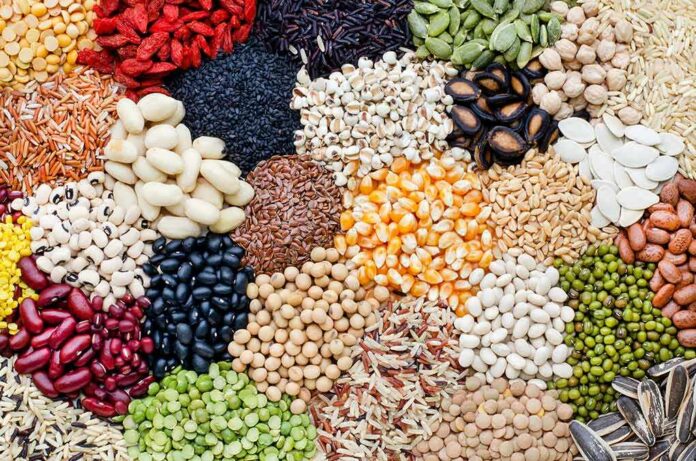
Fiber’s heart benefit is not a folk remedy or a marketing slogan; it is one of the more durable signals in nutritional epidemiology, with repeated cohort studies and pooled analyses showing that higher intake tracks with fewer coronary events and less cardiovascular death.
Key Points
- Higher fiber intake is consistently associated with lower coronary and cardiovascular risk across large cohort studies and meta-analyses.
- The strongest signals appear for total fiber, cereal fiber, fruit fiber, and some insoluble or water-soluble fractions.
- The evidence is persuasive, but it is still mostly observational, so it supports association more strongly than definitive causation.
- The practical lesson is simple: the heart-health case for fiber is strongest when it comes from foods, not supplements, and when it is part of an overall high-quality diet.
What the Evidence Actually Shows
The modern fiber-and-heart story begins with a consistent pattern: people who eat more fiber tend to have fewer coronary events, fewer fatal coronary outcomes, and lower cardiovascular mortality overall. In a major JAMA Internal Medicine cohort analysis, each 10-gram-per-day increase in energy-adjusted, measurement error–corrected total fiber was associated with a 14% lower risk of all coronary events and a 27% lower risk of coronary death. That is not a trivial effect size, and it is especially notable because the association persisted after adjustment for demographics, body mass index, and lifestyle factors.
The broader literature points in the same direction. A BMJ systematic review and meta-analysis found that total dietary fiber intake was inversely associated with cardiovascular disease and coronary heart disease, with a relative risk of 0.91 per 7 grams per day for both outcomes. An umbrella review that synthesized 31 meta-analyses reported that every highest-versus-lowest comparison it examined showed statistically significant reductions in cardiovascular disease mortality, cardiovascular disease incidence, coronary heart disease, and stroke. When you see the same direction of effect repeated across cohorts, pooled analyses, and different populations, the burden shifts from asking whether the association exists to asking how it should be interpreted.
Why Source Matters More Than the Slogan
The heart literature does not treat all fiber as interchangeable. That distinction matters because fiber is a category, not a single molecule, and its physiological effects depend on solubility, fermentability, viscosity, and the food matrix that delivers it. In the JAMA coronary heart disease study, cereal fiber and fruit fiber were inversely associated with coronary risk, while the strongest reduction was seen for coronary death rather than all coronary events. In the BMJ meta-analysis, insoluble fiber and fiber from cereal and vegetable sources were associated with lower risk of cardiovascular disease and coronary heart disease, and fruit fiber was also linked to lower cardiovascular disease risk.
This source specificity is not a nuisance; it is the clue that makes the epidemiology intelligible. Fiber packaged in whole grains, fruits, vegetables, and legumes usually arrives with potassium, polyphenols, micronutrients, and a lower density of refined starches and added sugars. That makes it biologically plausible that the benefit is not just “more roughage,” but a dietary pattern shift that changes lipids, glycemic load, satiety, and inflammatory tone at the same time. The strongest studies do not prove that every gram works identically, but they do show that the protective signal is concentrated in the kinds of fiber people usually get from minimally processed plant foods.
How Strong Is the Case for Causality?
This is where the argument becomes more disciplined. The evidence is compelling, but it is not definitive in the way a long-term randomized trial with hard cardiovascular endpoints would be. Most of the backbone studies are prospective cohorts, plus systematic reviews and umbrella reviews of those cohorts. That design is valuable; it can follow large populations over time and capture real-world eating patterns. But it cannot fully separate fiber itself from the rest of the habits that travel with it: less smoking, more exercise, higher overall diet quality, better weight control, and greater health consciousness. Those are not theoretical concerns. They are the central limitation of observational nutrition science.
The caution is reinforced by how the estimates behave under deeper adjustment. In the women’s prospective study, higher fiber intake was associated with lower cardiovascular disease and myocardial infarction risk at first, but the association was not statistically significant after fuller multivariable adjustment. That does not erase the broader signal; it does show that effect estimates can move when the model gets more exacting. A fair reading of the literature is therefore not “fiber is proven to prevent heart disease,” but “higher fiber intake is repeatedly associated with lower cardiovascular risk, and the association is strong enough, consistent enough, and biologically plausible enough to matter.”
What the Best Studies Suggest About Dose and Magnitude
The practical effect sizes are meaningful, but they are not magical. The BMJ pooled estimate of 0.91 per 7 grams per day implies a roughly 9% lower risk of cardiovascular disease and coronary heart disease for each 7-gram increment. The JAMA coronary heart disease study found a 14% lower risk of all coronary events and a 27% lower risk of coronary death per 10 grams per day. Another pooled analysis summarized in the evidence base estimated about a 19% lower risk of cardiovascular disease death per 10 grams per day, with fiber from grains and fruits contributing to that lower risk.
Those are the kinds of numbers that alter population risk meaningfully without implying a single-food cure. They are also exactly the kinds of numbers that get misread in public debate. A modest relative risk reduction can be highly important when it applies broadly across millions of people, but it is easy to oversell if it is stripped of context. Fiber is best understood as a risk modifier, not a shield. It tilts the odds, especially when it displaces refined grains and low-satiety, low-micronutrient foods. It does not annul the rest of cardiovascular risk management.
What Fiber Likely Does in the Body
The biological case is coherent even if the epidemiology is doing most of the heavy lifting. Fiber lowers the post-meal glycemic spike, increases satiety, changes bile acid handling, and can reduce LDL cholesterol through altered cholesterol absorption and hepatic metabolism. Fermentable fibers also feed the gut microbiota, producing short-chain fatty acids that influence inflammation and metabolic signaling. None of that alone proves the coronary findings, but it makes the association look less like statistical fog and more like an expected outcome of known physiology.
That is why the food source matters. Cereal, fruit, and vegetable fibers are often delivered inside intact plant structures, with viscosity and fermentability that differ from isolated or heavily processed additives. Whole-food fiber also tends to come with a dietary pattern that is lower in sodium, lower in refined carbohydrate load, and richer in protective micronutrients. The heart benefit, in other words, is not only about the fiber molecule. It is about what a fiber-rich eating pattern replaces, and what metabolic terrain it creates over years rather than days.
What a Careful Reader Should Conclude
The right conclusion is neither triumphalism nor doubt for its own sake. The weight of evidence supports a robust inverse association between dietary fiber intake and coronary as well as broader cardiovascular risk, with the best signals seen for cereal and fruit fiber and with several pooled analyses showing similar direction and magnitude across populations. At the same time, the literature remains observational enough that a cautious scientist will resist converting association into absolute causation.
For anyone trying to use the evidence intelligently, the policy implication is straightforward: fiber-rich foods deserve a central place in cardiovascular prevention because the totality of data points that way, the risks are low, and the mechanism is plausible. The most defensible reading is not that fiber is a miracle, but that it is one of the rare dietary factors for which the epidemiology, the physiology, and the practical guidance all point in the same direction.
Sources:
docs.google.com, jamanetwork.com, pmc.ncbi.nlm.nih.gov, bmj.com, pubmed.ncbi.nlm.nih.gov, sciencedirect.com