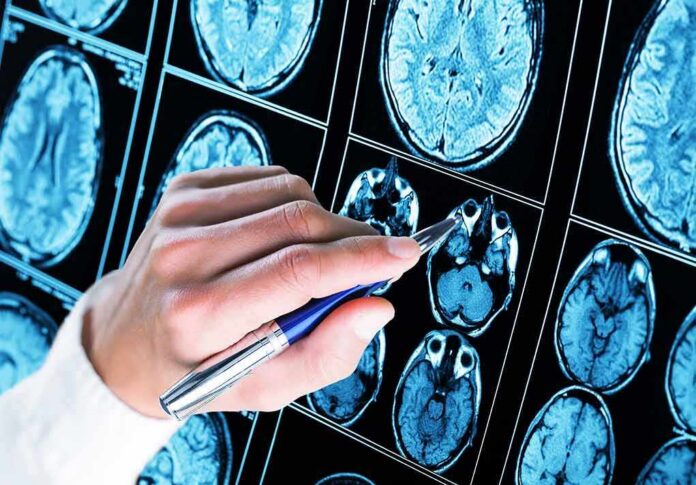
Scientists have found a hidden pocket of immune tissue inside the skull that may act as the brain’s own emergency response team against cancer.
Quick Take
- Washington University researchers found lymph node-like immune clusters inside mouse skull bone marrow for the first time.
- In mice with brain tumors, these skull clusters reacted to cancer signals before the body’s distant lymph nodes did.
- The structures sit close to the brain and appear connected to it through small channels in the bone.
- The findings so far come from mouse studies, part of a growing field on skull-to-brain immune links.
A Surprise Discovery Inside The Skull Bone
Researchers at Washington University School of Medicine in St. Louis discovered lymph node-like structures inside the skull bone marrow of mice, according to a university news release. This marks the first time scientists have identified organized immune clusters in that exact spot. The team found these clusters act as rapid first responders against brain cancer, sensing trouble before signals ever reach the body’s distant lymph nodes.
Lymph nodes normally sit in the neck, armpits, and groin. They act like checkpoints where immune cells learn about threats and organize a response. Finding similar structures packed inside skull bone marrow surprised researchers, since bone marrow was long seen mainly as a factory for blood cells, not a command center for immune defense near the brain.
Why Location Near The Brain Matters So Much
The skull sits directly above the brain’s protective layers, called the meninges. Scientists have already shown that fluid surrounding the brain flows into skull bone marrow, carrying signals from brain tissue straight to immune cells stationed there. That short distance may explain why skull-based immune hubs can react to a tumor faster than lymph nodes located far away in the neck or chest.
Other research groups have mapped physical channels connecting the skull bone marrow to the brain’s outer lining. These channels let immune cells travel back and forth, and they appear to matter both in health and during disease, including glioblastoma, the most aggressive form of brain cancer. The skull, in other words, may work like a guard post built right into the wall surrounding the brain.
How Glioblastoma Changes The Immune Landscape
Glioblastoma does more than grow inside the brain. Studies show it also disrupts the skull bone itself and reshapes the immune cell mix living inside its marrow. Researchers documented shifts including a rise in neutrophils, a type of infection-fighting cell, along with declines in certain antibody-producing B cells near the tumor site.
Separate work has identified organized lymphoid clusters within skull bone marrow that contain specialized helper cells driving antibody responses. These clusters look and behave much like miniature training camps for the immune system, positioned exactly where brain-derived signals first arrive. That structure supports the idea that the skull is not just storage tissue but an active participant in defending the brain.
What This Could Mean For Future Cancer Treatment
Glioblastoma remains one of the hardest cancers to treat, partly because the brain is shielded from much of the body’s immune system. If skull bone marrow truly works as a local, fast-acting immune hub, it could become a target for new therapies designed to boost that natural defense rather than fight the disease from outside the skull entirely.
One ongoing project at the University of California is studying skull bone marrow directly as a possible source of anti-tumor immune cells in glioblastoma patients, backed by charity funding through 2025. That kind of targeted, practical research is exactly the sort of steady, evidence-based progress worth watching, rather than chasing hype before the science is proven in people.
Mouse Findings Still Need Human Confirmation
Every discovery described here comes from mouse studies. Mice are useful stand-ins for early brain cancer research, but their immune systems and tumor behavior do not always match humans exactly. Scientists studying skull bone marrow channels note these structures exist in both mice and humans, which gives real reason for optimism as this research moves forward.
Scientists have discovered hidden "immune hubs" inside the skull that act as rapid first responders for the brain. This discovery could transform how we treat Alzheimer’s, brain cancer & neurodegenerative diseases!
🔗 https://t.co/yq6XMpB0Y6#neuroscience #brainhealth pic.twitter.com/PxQ0vA1EGT
— ACSR (@ACSRbiobank) September 16, 2026
The bigger picture here is encouraging without being overblown. Researchers are not claiming a cure. They are mapping a previously overlooked part of human anatomy that might already be working to slow brain cancer, and learning how to help it work even better could open a genuinely new front against one of medicine’s toughest diseases.
Sources:
sciencedaily.com, medicine.washu.edu, earth.com, en.haberler.com, nature.com