The air trapped inside your house can carry more pollution than the air outside it, and most of the fixes cost less than a new air purifier.
Quick Take
- Removing the source of pollution works better than any filter or gadget you can buy.
- Ventilation, filtration, and moisture control form the three pillars experts agree on.
- Filter-replacement advice varies widely, from every two weeks to every three months, depending on conditions.
- Opening a window helps only when outdoor air is actually cleaner than indoor air.
Why Source Control Beats Every Gadget On The Shelf
Before buying anything, find what’s making the air bad and get rid of it. The Art of Healthy Living points to dust, smoke, excess moisture, and chemical products as the usual suspects in most homes. Eliminating a source stops pollution at the root instead of chasing it around the room with a machine.
Common culprits hide in plain sight. Scented candles, certain cleaning sprays, and off-gassing furniture all release chemicals into rooms where families spend hours every day. Swapping these for low-emission alternatives costs little and removes the pollution before it ever becomes airborne, which is the whole point of source control.
Ventilation, Filtration, And The Moisture Problem
Once sources are controlled, air needs somewhere to go. Simple habits matter here: running kitchen exhaust fans while cooking, cracking windows for cross-breeze, and wiping down bathrooms after a hot shower all cut down trapped moisture and odors. The Art of Healthy Living specifically recommends venting steam and moisture right after showers to prevent mold growth.
Mold and dust mites thrive in damp air, so humidity control is not optional. Keeping indoor humidity in a moderate range discourages both without needing constant chemical treatment. Pairing a dehumidifier in damp seasons with regular filter swaps keeps particle counts and moisture problems from compounding each other inside closed-up rooms.
The Filter-Schedule Confusion Homeowners Face
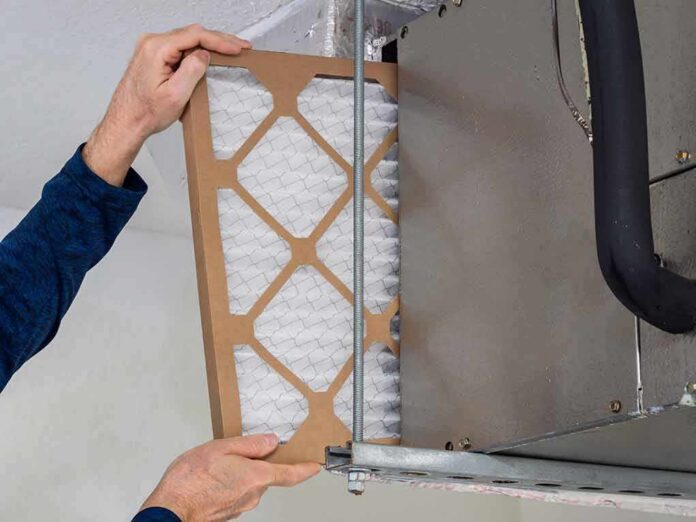
Here’s where advice gets murky. Some guidance calls for changing air filters every two weeks for peak performance, while reporting tied to federal wildfire-smoke guidance points to a one- to three-month replacement window during normal conditions. Neither source spells out exactly why the gap exists, leaving homeowners to guess whether smoke events, filter type, or household size explains the difference.
The practical answer is probably “it depends,” and that is not a satisfying one. A household with pets, heavy cooking, or wildfire smoke nearby should lean toward the shorter two-week cycle. A quieter home with standard filtration can likely stretch toward the longer federal timeline without sacrificing air quality or burning through filters unnecessarily.
When Opening A Window Helps And When It Hurts
Fresh air sounds simple, but it is conditional. The Art of Healthy Living advises opening windows occasionally, while checking local pollution reports first, since outdoor smog or smoke can make indoor air worse rather than better. During wildfire events, the better move is sealing up and switching the HVAC system to recirculate indoor air instead of pulling in smoke.
That recirculation advice, along with avoiding activities like frying food or burning candles during smoke events, comes from federal guidance reported alongside local wildfire coverage. It’s a reminder that the “open a window” rule isn’t universal. Checking conditions first turns a reflexive habit into an informed decision that actually protects the household.
Separating Real Fixes From Unproven Extras
Houseplants, activated charcoal, and UV systems get mentioned often as air-quality boosters, but the available material doesn’t attach measured results to these claims. No removal rates, no room-condition data, no published studies accompany the advice. That doesn’t make them useless, but it does mean they belong in the “nice extra” category, not the core strategy.
The core strategy stays consistent across every credible source: find and remove the pollution source, move air through the home deliberately, filter what you can’t remove, and manage moisture before it becomes mold. Everything else, from scented plants to specialty filters, is a supplement to that foundation, not a replacement for it.
Homeowners chasing a single miracle product are missing the bigger picture. Clean indoor air comes from a handful of boring, repeatable habits, not an upgrade swipe of a credit card. Stack source control, ventilation, filtration, and moisture management together, and the air quality in most American homes improves without a dramatic renovation bill.
The 5 Major Pollutants An Indoor Air Quality Assessment Can Reveal and How To Address Each of Them…
VIEW TIPS… https://t.co/FEeUb3TySo#airducts #airductcleaning #airductinstallation #airductrestoration #hvac #dryerventcleaning #fortlauderdale #southflorida #broward pic.twitter.com/pA32mgrEQ0— South Florida Ducts (@sfducts) November 1, 2026
No home will hit perfect air quality through one trick alone. But combining these proven categories gives families a realistic, affordable path to breathing easier every single day, regardless of what’s burning in the hills or blowing through the furnace vents outside.