Doctors in Philadelphia say a dangerous brain condition is showing up more often, and they cannot fully explain the increase.
Story Snapshot
- CBS News Philadelphia reports rising cases of a potentially dangerous brain condition, with doctors unsure of the exact cause.
- The condition is a brain aneurysm, a bulge in a blood vessel that can rupture and be fatal.
- Medical research shows unruptured brain aneurysms already exist in roughly 3% of the general population.
- Women, smokers, and people with high blood pressure show up more often in aneurysm studies.
- Experts say more imaging and specialty care, not just a true outbreak, could explain some of the rise.
A Rising Number of Cases in Philadelphia
CBS News Philadelphia health reporter Stephanie Stahl told viewers on September 16, 2026, that cases of a potentially dangerous brain condition are increasing and that doctors are not sure why. The report calls the trend disturbing and points to local hospitals seeing more patients. No single hospital system or public health agency has released numbers pinning down exactly how large the increase is or over what time period.
Philadelphia is home to several major neuroscience centers, including programs at Penn Medicine, Jefferson Health, and Temple Health, all of which treat brain aneurysms regularly. The city’s Department of Public Health also tracks disease data through its Health Information Portal, though that system does not appear to have published specific aneurysm case counts tied to this report.
What a Brain Aneurysm Actually Is
A brain aneurysm is a weak spot in a blood vessel wall that bulges or balloons outward. When it ruptures, blood spills into or around the brain, causing a sudden, severe headache and a life-threatening type of stroke. About one in three people who suffer a rupture dies, and another third are left with lasting damage, according to aneurysm research. Most aneurysms, though, never rupture at all.
Why the Numbers Are Hard to Pin Down
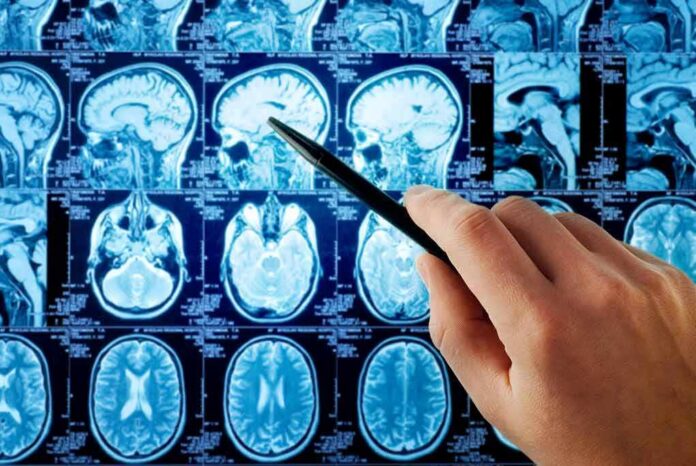
Unruptured brain aneurysms are not rare. Research shows they appear in roughly 3% of the general population, meaning many people carry one without ever knowing it. A rise in reported cases at a single city or hospital system could reflect a real increase in new aneurysms, but it could also come from more people getting brain scans for unrelated reasons and doctors finding aneurysms they were not looking for.
Detection tools themselves add uncertainty. A review of studies using artificial intelligence to spot cerebral aneurysms found most of that research carried a high risk of bias, with weak testing methods and limited real-world validation. That means better or more frequent scanning, not necessarily a true medical outbreak, could be driving some of what doctors are seeing show up on brain imaging.
Who Faces the Highest Risk
Large studies point to clear risk patterns. One analysis of nearly 348,000 participants found 66% of unruptured aneurysm cases occurred in women, even though women made up only 51% of the study group. Age, smoking, high blood pressure, family history, and certain genetic conditions also raise a person’s odds of developing an aneurysm, according to multiple medical reviews.
Researchers still do not fully understand why women, especially after menopause, face a higher risk than men. Some studies suggest hormone changes play a role, but the exact biological reasons remain an open question in ongoing research rather than a settled fact.
What This Means for Patients
For everyday Philadelphia residents, the takeaway is straightforward. A sudden, severe headache unlike any felt before is a warning sign doctors say should never be ignored. People with known risk factors, particularly smoking and high blood pressure, carry a higher chance of developing an aneurysm and should talk to their doctor about screening options rather than wait for symptoms to appear.
Local hospitals, including Jefferson Health’s dedicated neuroscience center and Penn Medicine’s neurology program, continue treating aneurysm patients using surgery and minimally invasive procedures. Whether the reported rise reflects a genuine increase in disease or simply more scans catching more cases, doctors agree the condition remains serious enough that any sudden neurological symptom deserves immediate medical attention.
Sources:
youtube.com, pennmedicine.org, quality.healthfinder.fl.gov, medifind.com, a-better-place.com