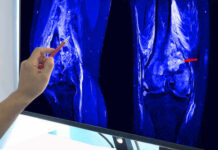
A PhD student’s deliberate “mistake” in a Cambridge lab unlocked a revolutionary light-powered reaction that could slash drug development time and waste overnight.
Story Snapshot
- David Vahey removed a photocatalyst expecting failure, but the reaction thrived, birthing an “anti-Friedel–Crafts” method for late-stage drug tweaks.
- LED light drives precise carbon-carbon bonds at room temperature, ditching toxic chemicals and harsh conditions of traditional synthesis.
- Team harnessed AI from Trinity College Dublin and AstraZeneca’s scaling to validate real-world pharma potential.
- Published March 12, 2026, in Nature Synthesis, this serendipitous flip promises greener, faster drug innovation.
The Unexpected Lab Breakthrough
David Vahey, PhD researcher at St John’s College, Cambridge, ran a routine control test in Professor Erwin Reisner’s lab. He stripped out the photocatalyst, anticipating total failure. Instead, the reaction accelerated, spitting out an odd product. This anomaly exposed a new pathway: a light-driven reaction forming carbon-carbon bonds on complex drug molecules late in synthesis. Visible LED light powered it all under mild conditions, no metals or toxins required. Reisner’s team pounced, mapping the mechanism through electron donor-acceptor interactions. What began as a dud control flipped chemistry on its head.
Overcoming Friedel-Crafts Limitations
Friedel-Crafts reactions date to the 1880s, forging carbon-carbon bonds with strong acids and metal catalysts under brutal heat. They demand simple starting molecules early in synthesis because complex drug scaffolds shatter under those conditions. Vahey’s discovery inverts this: the “anti” version tolerates functional groups at ambient temperature. Pharma chemists tweak “hit” compounds without resynthesizing from scratch. AstraZeneca tested it on drug-like molecules, confirming high selectivity and yield.
Reisner’s photosynthesis-inspired group at Cambridge chases sunlight-driven chemistry from waste and CO2. Their prior photoelectrochemical work set the stage, but this serendipity echoes penicillin’s fluke discovery. No exact precedent exists for such late-stage precision, yet light-driven trends accelerate. The method’s tolerance opens vast chemical space, letting scientists explore drug analogs rapidly without environmental harm.
Collaborative Push to Reality
Trinity College Dublin built machine-learning models predicting reaction sites on novel molecules, slashing trial-and-error. AstraZeneca adapted it for continuous-flow systems, proving scalability for industrial production. Vahey noted it enables “precise adjustments much later… without toxic reagents.” Reisner called sustainable chemical transitions “one of the most difficult parts of the energy transition.” Their non-hierarchical alliance—academia leading, industry validating—delivers practical green tools. Peer-reviewed in Nature Synthesis on March 12, 2026, it stands ready for medicinal chemistry adoption.
A Cambridge Lab Mistake Reveals a Powerful New Way to Modify Drug Molecules https://t.co/h1LgdqCpAt pic.twitter.com/V5sJ6qvRyC
— Chemistry News (@ChemistryNews) March 12, 2026
Short-term, chemists optimize drugs in days, not months, trimming R&D costs. Long-term, pharma shrinks its toxic footprint, aiding public health and regulatory compliance. Patients gain better therapies faster. Economically, fewer failed trials boost bottom lines; socially, less waste protects communities. This bolsters continuous manufacturing, positioning light methods as standards. Uniform expert praise highlights serendipity’s role, backed by rigorous data—no hype, just facts.
Sources:
Failed experiment by Cambridge scientists leads to surprise drug development breakthrough
Cambridge scientists’ failed experiment sparks unexpected breakthrough in drug development
FirstWord Pharma story on Cambridge drug breakthrough
A Cambridge Lab Mistake Reveals a Powerful New Way to Modify Drug Molecules
Cambridge scientists develop light-driven method for late-stage drug modification