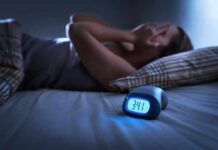
The most disruptive thing about springing forward is not the missing hour on Sunday, but the week-late migraine ambush your brain never sees coming.
Story Snapshot
- Spring Daylight Saving Time creates a predictable spike in migraine attacks, especially about a week after the clock change.
- The real culprit is circadian misalignment and loss of deep sleep, not simply one night of staying up too late.
- Evidence suggests autumn’s “extra hour” may actually ease migraine frequency for some people.
- With planning, migraineurs can turn DST from an inevitable ambush into a manageable, calendar-marked risk window.
The week after you spring forward is not as harmless as it looks
Most people gripe about losing an hour when clocks spring forward, then move on. Migraine patients do not have that luxury. Research from German headache diaries shows attacks do not surge on the time-change weekend itself; they climb roughly seven to eight days later, with Mondays standing out as especially brutal. That pattern points away from “bad Sunday sleep” and toward a slower, more insidious mismatch between your body clock and the new social schedule.
That delayed spike matters for anyone trying to keep a job, care for family, or just function without being sidelined by pain. When a neurologic hit repeatedly lands one workweek after a government-scheduled clock change, that is no longer random bad luck. It becomes a structural, predictable stress test on people whose nervous systems already run close to the red line. The short attention span of public debate around DST hides a long migraine tail that arrives right as everyone else has “adjusted.”
Deep sleep is the hidden casualty of the spring time change
American researchers recently followed adults with episodic migraine for two weeks before and two weeks after the March time change, tracking both their sleep and their headaches. Total sleep minutes barely budged after the shift, a finding that undercuts the casual idea that people just “sleep less” for a while. What changed was quality: deep sleep dropped significantly. At the same time, migraine incidence nearly doubled, from single-digit to mid-teens attacks per hundred person-days.
That combination is critical. When quantity holds steady but slow-wave, restorative sleep erodes, the brain pays a price. Deep sleep is when pain pathways reset, neurochemistry rebalances, and the system builds resilience for the next day’s stimuli. Strip away enough of that and the threshold for a migraine drops. In that context, blaming “one night of staying up to watch a show” misses the real story. The clock change quietly reshapes the architecture of sleep in a way the alarm clock cannot show you.
Circadian misalignment turns a social decision into a neurologic problem
The circadian system is not a lifestyle accessory; it is hardwired biology tied to light, darkness, and melatonin. When government policy suddenly advances social time by an hour each March, sunrise does not move with the same obedience. Morning light arrives “later” by the clock, while evening light stretches further into the night, nudging many people toward later bedtimes even as fixed work and school start times demand earlier wake-ups.
For migraine-prone brains, that mismatch is more than inconvenient. Prior work on circadian dysregulation shows that delayed sleep timing and misaligned internal clocks correlate with more frequent and more severe migraines, even when total sleep duration stays intact. Pain thresholds, serotonin signaling, and central sensitization all appear to shift under circadian strain. The spring-forward schedule essentially forces millions of people into a miniature, compulsory form of social jet lag, then expects full productivity on Monday morning.
Not all time changes are created equal, and policy should admit it
The same German data that highlight a springtime migraine surge also suggest something encouraging about autumn. When clocks fall back and social time slides closer to standard, sun-based time, migraine frequency trends downward. That pattern fits with what many chronobiologists have argued for years: our biology tolerates, and may even benefit from, schedules anchored more tightly to morning light instead of stretched late into the evening for commercial convenience.
If a government-mandated clock change repeatedly increases cardiovascular events, traffic accidents, and now migraine burden in the spring, while the autumn return toward standard time may ease some of that strain, which version respects human biology and productivity better? Any serious debate about keeping or scrapping seasonal clock changes should contend honestly with that asymmetry instead of treating both shifts as equivalent inconveniences.
How migraine patients and clinicians can fight back against the calendar
People living with migraine cannot wait for Congress to sort out Daylight Saving Time. They need tactics now. Headache specialists increasingly frame the spring transition as a risk window to plan around, much like known dietary or hormonal triggers. That might mean gradually shifting bed and wake times in the week before the change, protecting morning light exposure, dialing down screens at night, and temporarily tightening up on caffeine, alcohol, and erratic meal timing that can further rattle circadian stability.
Clinicians can also use the calendar to their advantage. For patients with clear sleep-sensitive patterns, some specialists consider front-loading education and, when appropriate, adjusting preventive strategies ahead of March. Digital tools and wearables now make it easier to track both sleep stages and headache diaries through the transition, turning vague hunches into measurable data. Limited data mean these strategies still evolve, but the principle is solid: when the state moves the clock, migraine patients should not have to go in blind.
Sources:
Seasonal Time Changes and Migraine Frequency: A Biseasonal Analysis
Daylight Saving Time, Deep Sleep, and Migraine Incidence Around the US Spring Transition
How Daylight Saving Time Affects Migraines
Can Circadian Dysregulation Exacerbate Migraines?