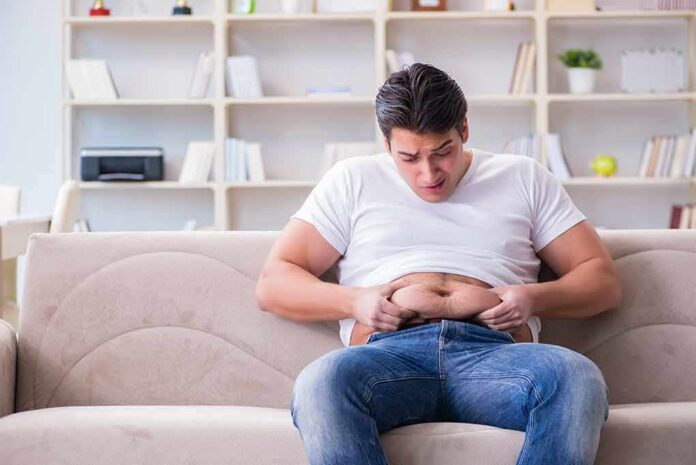
That tight, round bump pushing against your waistband after dinner isn’t fat sneaking up on you overnight — it’s a specific, well-documented chain reaction inside your digestive tract, and doctors can explain exactly why it happens.
Quick Take
- Post-meal bloating has several real medical causes, including slow digestion, trapped gas, and constipation.
- Researchers link some cases to a condition where the diaphragm and belly muscles work against each other instead of together.
- Certain foods, like beans, dairy, and high-fiber carbs, are known to ferment in the gut and produce extra gas.
- Stress and nerve signals between the brain and gut can make the stomach more sensitive to normal digestion.
What Your Gut Is Actually Doing After a Meal
When food hits your stomach, muscles and nerves are supposed to make room by relaxing the upper gut while gas and contents move downward. In many people with chronic bloating, that process misfires. Studies describe a pattern called abdomino-phrenic dyssynergia, where the diaphragm drops and belly muscles push outward instead of staying put, creating visible distension even without extra gas volume.
Doctors also point to slow stomach emptying and heightened nerve sensitivity as drivers of the burning, full feeling tied to functional dyspepsia. A large share of patients with this condition show measurably delayed emptying, meaning food sits longer and stretches the stomach wall longer than it should.
Constipation’s Hidden Role in a Swollen Stomach
Backed-up bowels are one of the most common and most overlooked reasons a belly balloons after eating. When stool builds up in the colon, new food has nowhere to go, and gas gets trapped behind it. Clinical reviews list constipation among the handful of leading causes of chronic bloating and distension, often alongside pelvic floor dysfunction that prevents normal bowel emptying.
This is why the timing matters so much. A person who hasn’t had a bowel movement in two or three days will often notice their stomach looks more pregnant after a normal-sized lunch than it would on a day with regular digestion. The meal didn’t change. The traffic jam behind it did.
Food Choices That Feed the Fermentation Process
Certain carbohydrates are notoriously hard for the small intestine to fully absorb. Lactose, fructose, sorbitol, and fiber-heavy foods like beans and cruciferous vegetables travel further into the colon, where bacteria ferment them and release gas as a byproduct. Clinical literature identifies this carbohydrate intolerance, along with bacterial overgrowth in the small intestine, as common and well-established triggers.
None of this means these foods are bad. It means some guts process them less efficiently than others, and the resulting gas has to expand somewhere before it works its way out. For many people, that somewhere is a visibly rounder stomach within an hour of eating.
The Gut-Brain Link Behind Sensitive Stomachs
Stress doesn’t just feel bad. It changes how the gut behaves. Research on functional dyspepsia points to visceral hypersensitivity, a state where normal amounts of gas or stretching register as painful or uncomfortable because of altered nerve signaling between gut and brain. That overlap between emotional state and physical symptoms explains why bloating often gets worse during stressful weeks even when eating habits stay the same.
When a Round Belly Signals Something More Serious
Most post-meal bloating is harmless and tied to digestion, diet, or stress. But medical guidance also stresses checking for warning signs such as unexplained weight loss, blood in the stool, persistent vomiting, or new severe pain, since those can point to conditions beyond ordinary bloating. A doctor’s evaluation, not a home remedy, is the right next step when those symptoms show up.
Why This Topic Is Exploding Online
Videos explaining bloating through traditional Chinese medicine concepts like spleen qi deficiency and digestive fire are drawing hundreds of thousands of views, часто steering viewers toward free masterclasses or personalized gut-health programs. Research on TCM approaches to gastrointestinal problems shows some promising signals but also describes the clinical evidence as thin and inconsistent compared to conventional treatment standards.
That gap between viral explanation and clinical proof isn’t unique to one creator. Researchers studying wellness content online have found that alternative-health marketing frequently blends real mechanisms with oversimplified cures, which makes it easy for viewers to mistake a catchy theory for a diagnosis. The honest answer for most people is less dramatic than any single video claims: bloating usually has a boring, fixable cause, and a doctor can help find it.
Sources:
youtube.com, verywellhealth.com, pmc.ncbi.nlm.nih.gov, consultqd.clevelandclinic.org, gut.bmj.com, giboardreview.com, dralexheyne.com