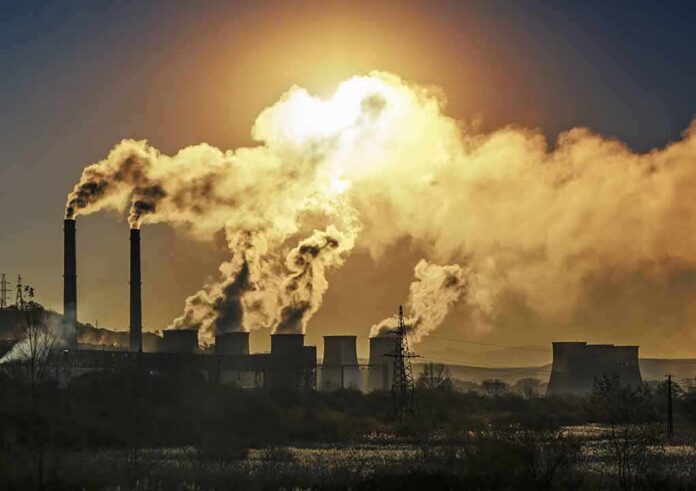
The United Nations’ own climate scientists now say the world has run out of time to avoid blowing past the 1.5°C warming limit, with current government policies on track to push temperatures up by 2.8°C by the year 2100.
Story Snapshot
- The UN Environment Programme’s 2026 Emissions Gap Report says avoiding an overshoot of 1.5°C is no longer possible.
- Current government policies point to about 2.8°C of warming by 2100; stronger pledges would still only bring that down to 2.6°C.
- The report says emissions cuts needed by 2030, 2035, and 2040 are far bigger than what countries have promised so far.
- Scientists say warming could still be pulled back down after overshoot, but only with huge cuts plus large-scale carbon removal.
UN Report Lays Out The Numbers
The United Nations Environment Programme (UNEP) released its Emissions Gap Report 2026 on October 21 from Nairobi, Kenya. The report says current government policies worldwide are on pace to produce about 2.8°C of warming above pre-industrial levels by 2100. Even if every country fully delivers on its latest climate pledges, warming would still land around 2.6°C, far above the 1.5°C target set under the Paris Agreement.
Titled “The Point of Return,” the report states plainly that temperatures will rise past 1.5°C before the century ends. Researchers say that outcome is now locked in because of decades of rising emissions. Still, the authors argue the overshoot does not have to be permanent, if nations make deep, fast cuts to greenhouse gases and pull carbon dioxide out of the atmosphere at scale.
What Overshoot Means For The Planet
Overshoot means the planet temporarily passes the 1.5°C mark before, hopefully, cooling back down later in the century. Earlier UN climate science already warned this kind of temporary overshoot was more likely than not under nearly every studied pathway, and that some damage from higher heat may not be reversible even if temperatures eventually fall again.
The report lays out specific cuts needed by three target years: 2030, 2035, and 2040. It finds these required reductions sit far above what countries have promised in their current national climate plans. That gap between promises and what the science demands is the central warning of the entire report.
A History Of Shifting Estimates
This is not the first time UNEP has revised its numbers. Earlier editions of the Emissions Gap Report have changed their estimates as country data, emissions inventories, and pledges were updated. For example, the 2026 estimate of emissions allowed by 2030 came in about 4 billion tons of carbon dioxide equivalent lower than the number UNEP published back in 2020.
That history does not make the new 2.8°C and 2.6°C figures wrong. But it is a reminder that these numbers are scenarios built on assumptions about future policy, not fixed predictions carved in stone. Small changes in what counts as a pledge, or how fast countries actually act, can shift the final math significantly from one year to the next.
Carbon Removal’s Uncertain Role
Much of the plan to bring temperatures back down after overshoot depends on carbon dioxide removal technology working at massive scale. Earlier UN climate science panels have flagged this reliance as risky, noting that large-scale carbon removal remains uncertain and largely unproven at the size needed to matter.
3/ Climate: UNEP's Emissions Gap Report says warming is set to overshoot 1.5°C, with about 2.8°C this century under current policies (2.6°C if all pledges are met).
Status: CONFIRMED by the UN report.https://t.co/HBkp9kEQjmhttps://t.co/KBuFeiXmH0— Robert Nunya (@RNunya97986) October 21, 2026
For everyday Americans watching from outside the climate policy world, the report lands amid growing frustration that global institutions set big goals without a clear, affordable path to reach them. Whether under Republican or Democratic administrations, the gap between international climate promises and the hard economic reality of energy costs and industrial jobs remains unresolved, and this report does not close that gap.
UNEP officials say the next few years are decisive. The report calls for “unprecedented” emissions cuts starting immediately, not decades from now. Governments meeting at future UN climate talks will face pressure to explain how they plan to close the gap between what they have promised and what scientists say is actually required to protect the planet.
Sources:
time.com, unep.org, wedocs.unep.org, ciel.org